
Transition Flights
“Please help us!” he cried as they plunged 10,000 feet per minute into a permanence of silence. It is a sad tale to behold. Sad indeed for the many lessons of what not to do. A sad tale worthy of relating to prevent such an unfortunate happenstance again.
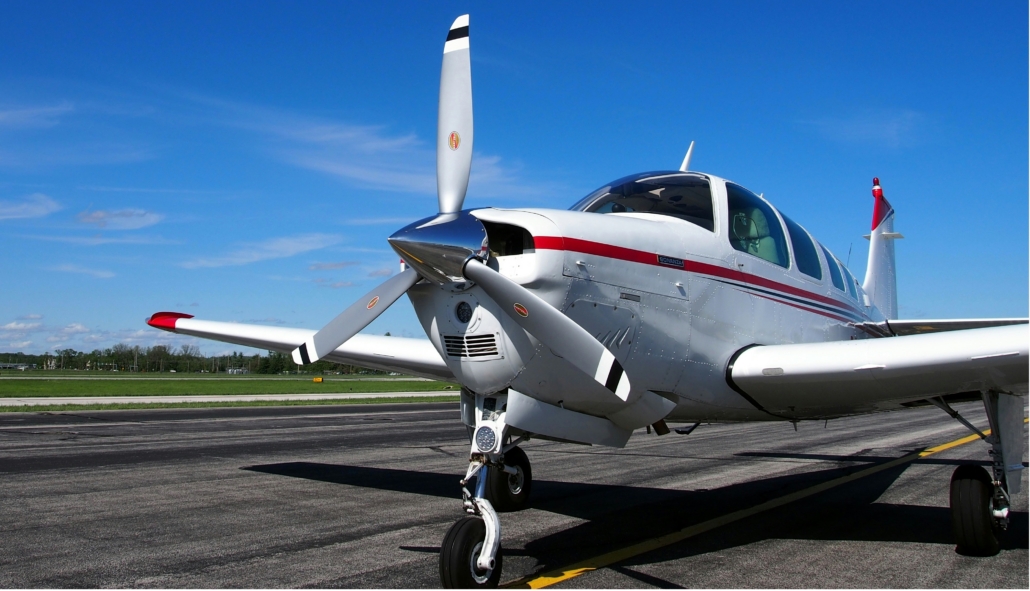
A pilot with limited experience transitions from a Piper Cherokee to a high-performance, faster, and more complex aircraft, a Beechcraft Debonair, and pays the final price from inexperience and lack of skills.
It is a sad story of a 45-year-old who learns to fly. She learns, but unfortunately, the skills remain weak and tarnished over time. Various instructors warn her of undeveloped skills and underexposed experience. In her limited defense, she continues to fly mostly with flight instructors who help correct her mistakes but never let her see the potential consequences of those mistakes. Her confidence grows, and on that fateful day, she ventures out with her father for a short trip that she has experienced many times before.
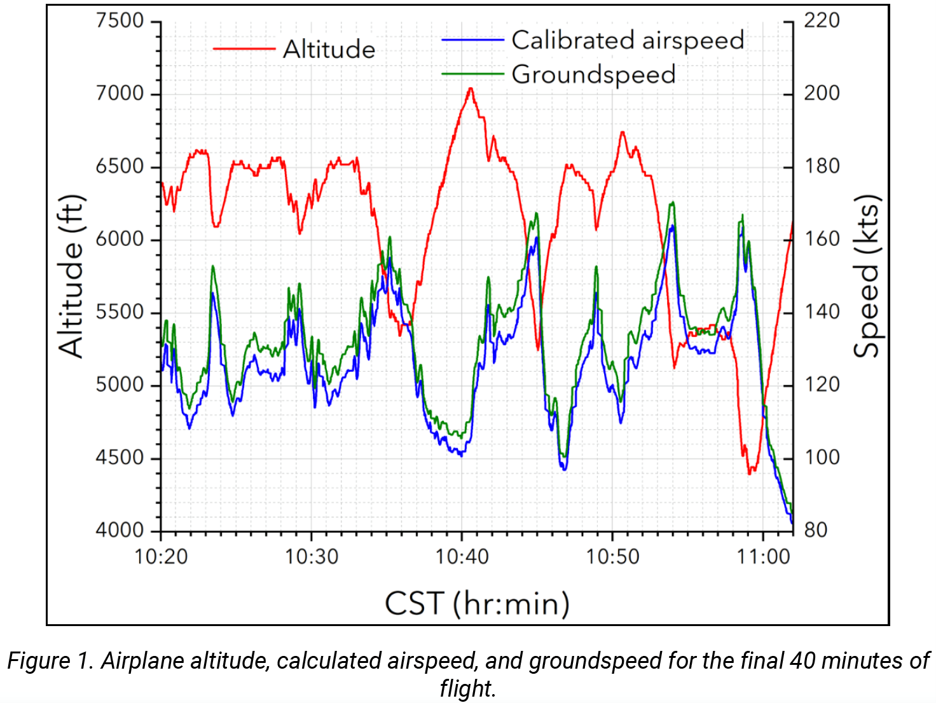
Twenty minutes into the flight, the ancient autopilot in her Debonair, looking for the pilot’s proper input to trim the aircraft, haunts her attention, but she is unable to quell its demand to maintain appropriate altitude. NTSB states: “These kinds of pilot-induced oscillations can occur when manual yoke or pitch trim inputs are in conflict with the autopilot’s pitch control inputs, leading to delayed, or out-of-sync, corrections, rather than a smooth, constant altitude hold.”
The excursions become worse over time, from 500 feet to 1,000 feet up and down. And somewhere in those harrowing moments, it appears that she over-trims the aircraft into a descent that plunges the aircraft and its passengers into a 10,000-foot-per-minute rate of descent and a 160-knot IAS, from whence few can recover. The unfortunate aftermath is terrain littered with scattered remains of shards of aluminum over a patch of land surrounded by trees.
The NTSB has the final word, as stated in Flying magazine:
“The National Transportation Safety Board has cited a loss of aircraft control possibly attributed to the misuse of the autopilot as one of the causal factors in the crash of a Beechcraft Debonair that killed aviation vlogger Jenny Blalock and her father James in December 2023 near Pulaski, Tennessee.
Blalock, 45, began her aviation training in 2021 and used video cameras in the cockpit to document her experiences on her YouTube channel, TNFlygirl.”
Data from the NTSB cite, “Toxicology results indicated that the pilot had used a combination of medications that may be used to treat conditions such as anxiety and depression, which may have performance-impairing effects.” The drugs noted on the toxicology report can cause, “may cause psychomotor and cognitive impairment such as slowed reaction time, diminished situational awareness, and sedation,” but were not determined to be causal in nature.
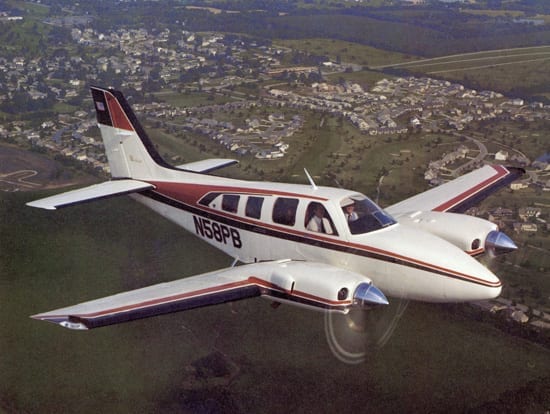
Transitioning between various aircraft requires training that is, in its essence, “relearning to fly again.”
What goes through a person’s mind is theirs to keep, but the actions that manifest from those thoughts become their lonely stage. We can imagine all sorts of inclinations from this morbid past: the desire to fly, the desire to express her experience by capturing it on video to share with the large numbers of followers on her YouTube channel, the desire to be independent in her flying abilities in spite of the nagging lack of experience and skill sets, the lack of understanding of the functions of the autopilot (NTSB labeled as “misuse of the autopilot”), and perhaps most importantly, the lack of hand-flying skills. The truth remains in what we know and what we may never know but are forced to conjecture.
In transitioning between various aircraft, for instance, moving from a Cessna 152/172 or a Piper Cherokee to a complex aircraft like a Debonair, Bonanza, or Baron requires training that is, in its essence, “relearning to fly again.” These aircraft are faster, require more training, and require more understanding than the training aircraft mentioned above.
Even moving from a six-dialed panel to a glass cockpit design requires a full knowledge of the sequential button-pushing to get the appropriate response from the information displayed on the glass, as well as actions meted out of the autopilot. I have had my share of transition risks from changing over from a turbocharged Mooney M20M Bravo several years ago to a G36 TN Bonanza. From a 530/430 combo to a G1000 NXi, the hazards are clear: not sequentially pushing the correct buttons for autopilot engagement in IFR conditions leads to having to hand-fly the approaches. Chalk that to an “experience.”
Having done that three or four times accidentally, double-pressing the NAV or APR buttons in turbulence, hand-flying the aircraft always saved the day. Learning, then, is an art of repetition. Learning is Practice. Learning is Experience. Learning is a process from the first day through thousands of hours spent in the cockpit. Learning is a continuum, never complete, always in the pursuit of enhancing one’s knowledge through practice and experience.
As pilots, some Risk Mitigation Strategies we might consider on every flight:
1. AVOIDANCE: Knowing the existing hazards in flight requires a pilot to plan against the hazard, either by changing plans to fly at a different time or not launching into a flight at all. If the weather is marginal and there has been little or no experience by the pilot in such weather over the past several months, avoidance is the best strategy, or flying with an experienced flight instructor.
2. RISK REDUCTION: Flying over terrain in mountainous areas and making sure the cloud ceilings are above the MEA, in case of icing. Not flying into a cold front with lowered icing levels, heavy headwinds, and changing fuel reserves. Determining the cloud ceilings, crosswinds, runway width conditions, and overall runway length at the destination airport before takeoff.
3. RISK TRANSFERENCE: Flying with an experienced flight instructor when the conditions require such needs. A pilot must be able to subjugate his/her feeling of overconfidence and ask for help when needed. For instance, a minor cold can block the Eustachian tubes and, in the clouds, can lend itself to a pilot’s spatial disorientation. Similarly, over-the-counter medicines like Benadryl can have a deleterious effect on cognition. The FAA’s IMSAFE is a good acronym to follow.
4. RISK ACCEPTANCE: Conscious decisions must be made with a full understanding of the known hazards that may be potentially encountered in the flight and preparation for the unknown hazards that require all skill sets required in flying to be at their maximum best.
5. RISK MONITORING: A pilot continues to monitor the flight from preflight to shutdown for any deviations in his own ability, the mechanics of the aircraft, and the engine function throughout the entire duration. Those actions that are required with an immediacy of action, such as an engine out on takeoff, are to be countered by a “memorized Emergency Checklist,” and others that require calm access to the POH. Such analysis is borne of experience and learning.
6. CREATING CHECKLISTS: It would behoove a pilot to create his own checklist items not mentioned in the POH if an STC has been added to the airframe or engine, e.g., turbocharger.
7. Periodic evaluation of the engine analytics would trigger a review if any parameters are off their normal mode.
So, what exactly can we learn from this sad tale?
1. Learning is a process that can take many years of experience. Experience is directly encountering risks that are not forecast and should always be done with an experienced flight instructor, especially for those who have limited experience and have not developed a skill set yet to overcome them. A student pilot’s mistakes must never be glossed over, but exposed so that the student can learn to address and correct for them. If learning is a change in knowledge, behavior, or attitude acquired through experience, study, or observation, then when does it become permanent? That remains a study in progress.
2. Transitioning from a slow, more forgiving, less complex aircraft to a faster, less forgiving, heavier, and more complex aircraft requires time and experience. It is more than just the retractable gear. The time spent requires diligence and understanding. The location of the equipment on the panel, the autopilot function, manual trim settings, light switches, circuit breakers, gear handle, flap handle, various speed limitations, etc. A Debonair is a whole different beast as compared to a Cherokee: faster, more agile, heavier, and much less forgiving if mishandled.
As pilots, we should never stop learning. Every moment in the cockpit is a learning experience.
Transitioning to different aircraft requires retraining and relearning.

- Don’t Do Virga - November 25, 2026
- Friday Photo: Autumn Colors on Approach - November 13, 2026
- Game Theory in Flying - November 2, 2026


Leave a Reply
Want to join the discussion?Feel free to contribute!