
Flying the BD-5J
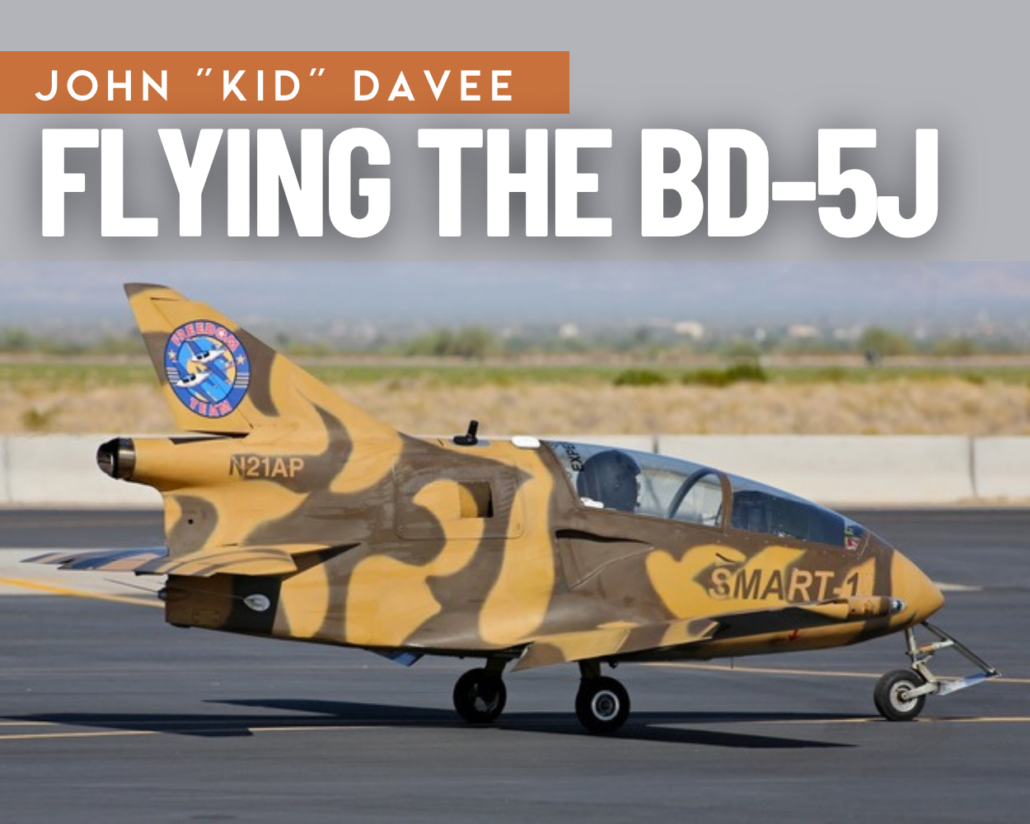
After spending 25 years flying fighters in the USAF, followed by 8 years in corporate aviation flying Learjets and Gulfstreams, I found myself behind a desk at FlightSafety International in Tucson as a Challenger Program Manager and Instructor. It was a great way to keep my hand in the aviation arena while being home with family every night.
I had a great group of instructors who helped keep the program viable and interesting. On any given day, animated conversations would break out. Usually, they revolved around our aviation experiences, teaching techniques, or changes within the industry.
On one particular day while working on the simulator schedule, an instructor sat down next to my desk and asked if I had been doing any flying lately.
My retort was, “Not recently. All I’m flying these days is a BD-5D”—meaning Big Desk, Five Drawers.
His immediate response: “Well, I flew a BD-5J this morning and had a great time.”
I quickly perked up. “You mean the micro-jet? The BD-5J?”
“Yes,” he responded.
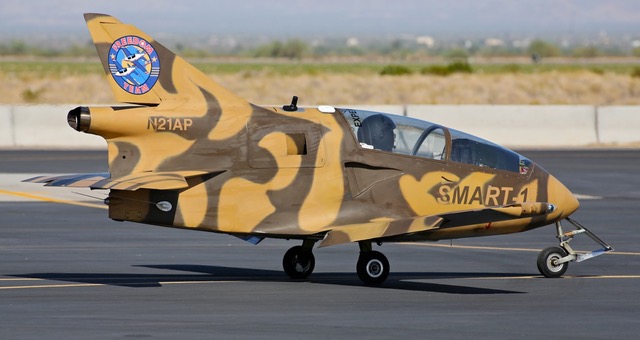
My barrage of questions immediately began: *Where? When? How can I get involved?*
That conversation set off a chain of events that soon had me interviewing with the owner of a BD-5J flight operations company. He was using the tiny jets to simulate specific threats for the military weapons system test community and was looking for another former fighter pilot to join his crew for upcoming contracts. After an in-depth interview and meeting the rest of the team, I was offered the position.
Then came the checkout process.
The Five-Phase Checkout
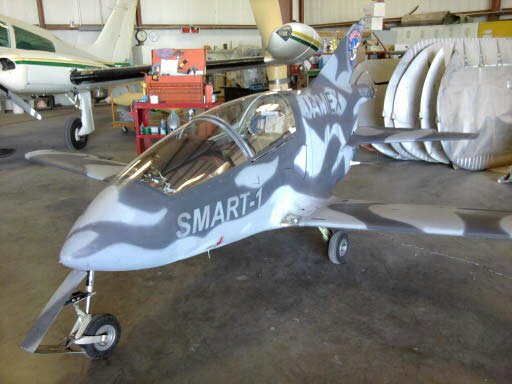 Since the BD-5J is a single-seat aircraft, the owner had established a strict checkout program to mitigate the chances of a new pilot bending one of his limited airframes.
Phase One: I had to fly a Cessna 172 with the owner so he could evaluate my aeronautical decision-making, basic stick-and-rudder habits, and communication flow.
Phase Two: Once I received the thumbs-up, I progressed to gliders to get used to the low-to-the-ground landing sight picture. We flew two different gliders out of a nearby soaring port—a brand-new experience for me. My Air Force air-refueling time proved to be a real plus when towing behind the towplane on climbout. Once released, we spent an hour catching thermals, executing aerobatics, and setting up for landing. Since the BD-5J’s main gear tires are only 5 inches tall, the glider was the perfect tool to calibrate my eyes for the flare.
As a side note, the team was initially concerned I might be too large for the cockpit. The other pilots were all under 5’6″ and under 160 pounds. I had a good three inches and 30 pounds on them. But as it turned out, I wore the right shoe size, hit the absolute maximum height/weight limits, and could squeeze into the cockpit—provided I didn’t sit on a seat cushion. BUT I COULD FIT! And I really wanted to fly this airplane.
Phase Three: Learning the aircraft systems, avionics, and specific mission profiles. By the end of this phase, I was thoroughly impressed by how this team of professionals had carved out such a unique niche in the defense testing environment. I felt ready to jump in and fly.
Not so fast, Kimosabe.
Phase Four: Engine starts, taxiing to get a feel for ground handling, memorizing control locations by touch, and mastering the shutdown procedures.
Phase Five: Flying the actual aircraft in the local area around Marana Regional Airport (KAVQ).
In the Cockpit
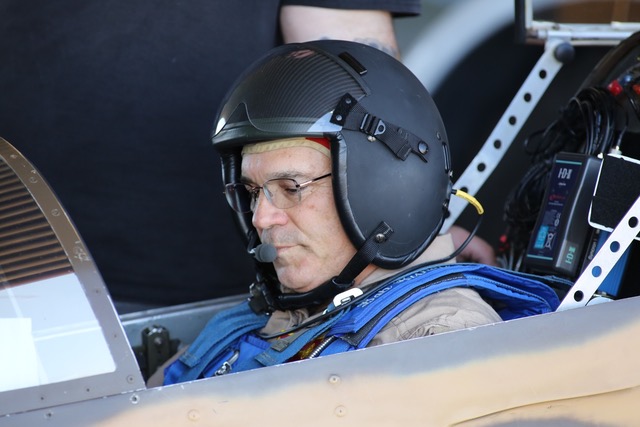 Dressed in my old USAF flight suit, a borrowed parachute strapped to my back, and carrying a converted military helmet, I began the process of shoehorning myself into the cockpit. Once wedged into the jet, I ran through the start sequence without incident and taxied out to the end of the runway for a final check by the mechanic.
As I lined up on the runway, I recalled the last time I had flown a single-engine jet. Back then, I was strapped to an ejection seat on a massive military runway in an afterburning fighter. *What was I thinking, flying an experimental micro-jet with a tiny engine mounted behind my head?*
The excitement quickly erased any lingering apprehension. I pushed the throttle to the stop and took off.
Gear up, flaps up, and climb to pattern altitude for the first touch-and-go. Things in the pattern happened fast; I wasn’t used to the acceleration difference compared to the Cessnas and Cherokees I’d been flying recently. But man, did it feel great.
After a few trips around the pattern, I headed out to the practice area for airwork before fuel got low. A little slow flight, stalls, loops, and aileron rolls later, it was time to head back for a full-stop landing.
Taxying back in, the reality set in: I was one of the very few pilots fortunate enough to fly the BD-5J. I was struck by its maneuverability, though the engine placement above the fuselage reference line took adjustment. Adding power caused the nose to pitch down, while reducing power pitched the nose up. We had discussed this extensively in ground school, but experiencing it in flight was another story entirely.
Mission Ready
After several transition flights, an FAA DPE added the “Experimental Aircraft: BD-5J” authorization to my ATP certificate.
Over the next four years, I flew testing and training missions across the country—from the Yuma MCAS training areas in Arizona and Michael Army Airfield in Utah, to White Sands Missile Range in New Mexico and inside the Washington, D.C. SFRA. It was incredible flying, made even better by working alongside true professionals.
Looking back as a CFI, here are my main takeaways from flying the BD-5J (or any airplane, for that matter):
1. Good training makes flying fun. Surrounding yourself with professionals sets you up for success.
2. Tailor training to experience. Instruction should always adapt to a pilot’s specific background and gaps in knowledge.
3. Embrace the building-block approach. Work through structured phases to build confidence. There is nothing worse than entering a flight with only a vague idea of what is expected of you.
4. Focus on risk mitigation. Seeing and experiencing flight maneuvers in a controlled environment before performing them solo dramatically increases safety.
5. Never stop learning. Talk openly about your mistakes as well as your successes. Thorough debriefs pass vital experience on to the next pilot—which just might save an aircraft or a life.
6. Maintain professionalism. How you approach a flight reflects on your instructors, your mentors, and the broader pilot community.
7. Have fun. If you aren’t doing it right, you’re probably not having fun either.
8. Protect the privilege. Flying is a privilege. Let’s protect it by staying positively engaged in the aviation community. Actions always speak louder than words.
Blue skies and enjoy the ride!
- Flying the BD-5J - August 26, 2026
- Unnecessary Comments on Short Final - January 26, 2026


Kid, Long time, no see! I too am retired, living on the north side of Hotlanta. If you ever come eastward, give me a call!
Cheers & Check 6!
Boots
Boots, always good to hear from you, and I look forward to reading each of your articles. If you head out west and happen to be in TUCSON, give me a call and we’ll have lunch together. Cheers, kid.
Kid,
Right now I’m working on a book! I’ll let you know when it comes off the presses! Maybe early next year!
Boots
Boots, That is great! I look forward to it and will definitely want to get a copy. Please let me know when it goes on sale. Also, have it review in the Daedalus Flyer.
Cheers, kid
So, you’re a Daedalian as well! That’s GREAT! I’m the Flight Captain of Flight 102 here in Atlanta. Howzabout you?