
A Ride in a Flying Fortress
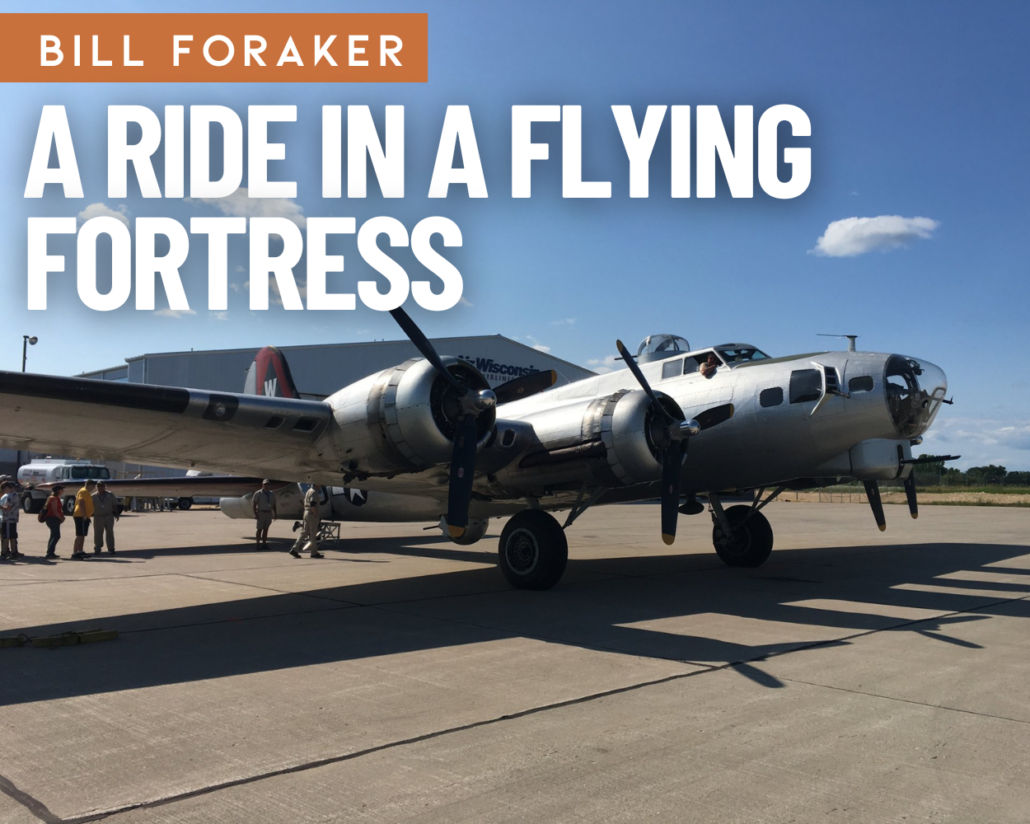
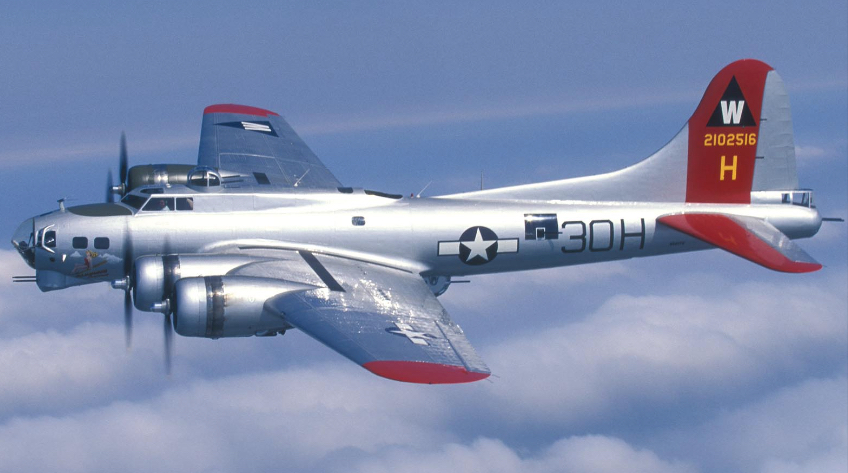
In April 1996, I had the opportunity to fly aboard EAA’s B-17 from Pigeon Forge, Tennessee, to Terre Haute, Indiana. It was truly a magnificent experience.
Four moderate-to-large adults flew to Pigeon Forge in Gary Rodgers’ 180-hp Pacer (but that’s another story), and we met one of our buddies there for our B-17 flight the next day. Because this was one of the longer inbound legs, we had about 2.2 hours in the B-17, which only added to the experience.
The next morning, we gathered at the aircraft and completed the preflight checks. Soon we were inside the Fortress and ready to go. I had heard many single- and multi-engine radial-engined airplanes from the outside, but hearing them from the inside was a completely different thrill. All the noise and vibration seemed to be channeled directly into the fuselage, and the roar inside was dramatic. As we taxied out, I found myself thinking about the young men who had taxied in B-17s on their way to combat missions—and about those who taxied out for takeoff but never made it back to base.
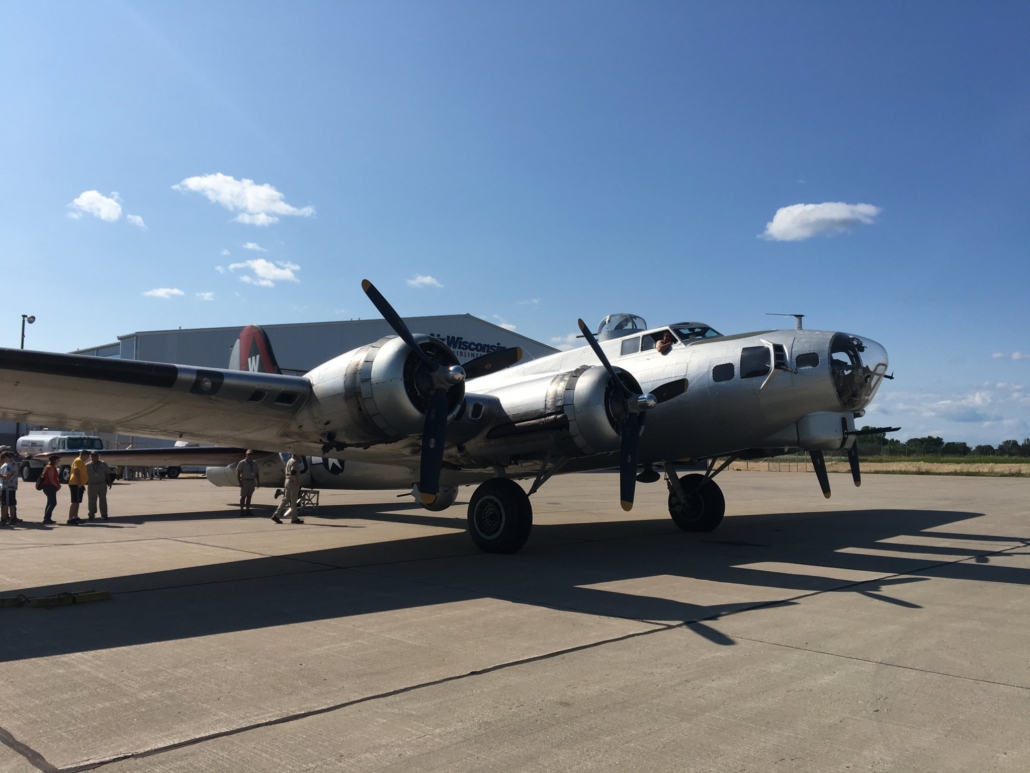
Then the engines came up to full power and we began the takeoff roll. I didn’t think we were accelerating nearly fast enough, and I was pretty sure we wouldn’t clear the trees at the end of the runway—but we did. Soon the wheels came up and we climbed to about 3,000 feet.
For the first part of the flight, we were in lousy VFR conditions, with reduced visibility, some rain, and low ceilings. Because of the weather, the actual crew couldn’t let us rookies “fly” the airplane, so we were told we’d have to wait for better conditions forecast farther north. Instead, we happily scurried around the aircraft, seeing everything we could. For a while, I was in the nose bubble, enjoying the straight-down view of the ground. The bombardier certainly had the best seat in the house—if that’s any consolation when people are shooting at you.
Suddenly, the plexiglass fogged up. I tried rubbing the haze off with my glove, then with my bare hand. That’s when it struck me how cold it was for us at 3,000 feet—and how unimaginably cold it must have been in 1943 at 18,000 feet. Taking my glove off was a small luxury that crews back then simply didn’t have.
When I couldn’t clear the haze, I realized it was on the outside. What if it was ice? Did the pilots know? What could I do? I had noticed a four-inch air vent in the nose, so I tried opening it slowly—yeah, right. It flew open instantly, and a chunk of ice smacked me in the face. Oh. My. ICE.
I stuck my hand outside and felt a thin coating of ice. Armed with this discovery, I scrambled back under the flight deck and into the waist to check the tail’s leading edges—nothing. I tried to see the wing leading edges but couldn’t. I then reported back to Ed Bowlin, one of the pilots, who smiled and said, “Saw some ice, huh?” I nodded and told him it was on the nose but not on the tail. He thanked me for the report. Only later did I realize he was well ahead of me—but he let me feel like I was helping.
After a few more chilly trips to check for ice, I was frozen. I asked the mechanic in the radio room if I could sit down for a while, and he said that would be fine. We closed the doors at each end of the compartment, and while it wasn’t warm, it was warmer than everywhere else. I eventually realized the mechanic was probably glad I sat down so I’d quit running back and forth checking for ice.
With the noise and no intercom, conversation was difficult. I sat there for 45 minutes with the roar of the engines in my head, imagining what it must have been like to cross the English Channel toward Germany—helpless, riding along full of bombs, waiting for something to happen, but desperately hoping nothing would.
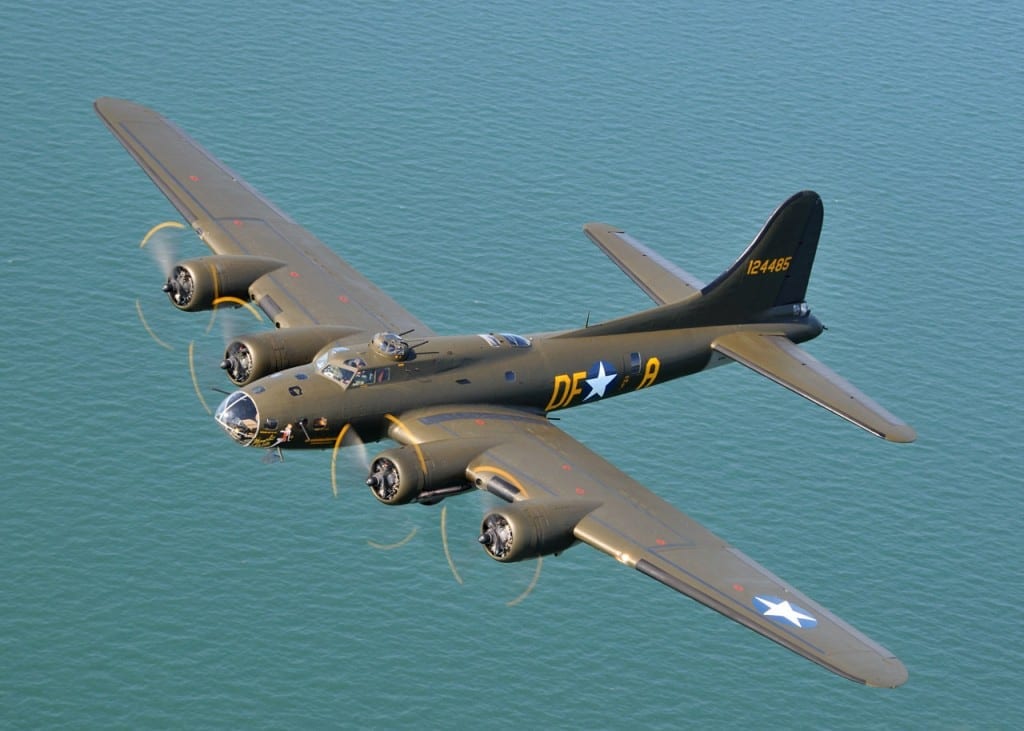
Just as forecast, we eventually reached better weather, and the crew began cycling the rookies through the left seat. One by one, and finally me. As I climbed into the seat and wrapped my hands around the big wheel, I thought about my father-in-law, a WWII B-17 pilot with the Eighth Air Force, who had only recently begun sharing his experiences. I didn’t feel like a 22-year-old flying into enemy territory—but I tried to imagine what it must have been like.
There I was at 1,800 feet MSL, flying over downtown Marshall, Illinois, engines roaring. I couldn’t see anyone running outside to look up, but I was later told they certainly heard us. As we cleared the north side of town, Connie Bowlin told me to turn toward Terre Haute. I eased into a gentle right bank, getting a feel for the big airplane. She responded nicely—if a little slowly.
Then Ed leaned forward and asked, “You’re a pilot, aren’t you?” I nodded. He grinned and said, a bit sternly, “Then turn this thing.” I added more wheel—still nothing. More wheel—and suddenly it all arrived at once. I wrestled the airplane into a stable bank, quickly realizing my arms were shaking from the back pressure needed to hold altitude. I begged Connie, “I’ll give you $100 if you tell me where the elevator trim is.” She smiled and told me to drop my right hand. Being the professional she is, she never asked for the money after we landed.
As I got Aluminum Overcast established on an east-southeast heading, I felt pretty good. Familiar with the approach into Terre Haute, I lined up on the outer marker to allow plenty of room. Connie glanced at the instruments and asked, “Where are we going?” I told her I was heading for the outer marker. She followed with, “Are we IFR?” It took me a second to realize she was having fun with me, so I announced over the intercom, “Turning left to intercept a one-mile final for Runway 5.” She smiled and nodded.
I guided the airplane onto final when Ed leaned in again and asked, “You gonna land this thing?” I shot back, “You think I’m up to it?” He laughed and said, “You better let me give it a try.” I grinned and climbed out of the best ride I’ve ever had.
Connie and Ed squeaked on a beautiful landing, and we taxied to the ramp, all of us grinning—there are a lot of teeth in the photos. On the ground, Ed told me my eyes were as big as plates when I came up from the nose after finding the ice. The Bowlins were the best host pilots imaginable. They let us do everything we wanted while keeping us safe the entire time.
I hope I remember for the rest of my life flying in that B-17—and thinking about the young men who flew them, and died in them, and about the triumph and sadness of war. It was an overwhelming experience.

- A Cold Ending to a Good Checkride - May 8, 2026
- A Ride in a Flying Fortress - March 9, 2026


Bill, My wife’s late father was a top Turret gunner and Flight Engineer on B-17’s with the Mighty 8th Air Force. On his second mission he was shot down and captured, but managed to escape and return to England after stumbling upon a British armored column. A while back, I made a business trip to England, and brought my wife with me so we could attend a reunion of the 95th Bomb Group at Horham, England. We didn’t get a flight in a B-17, but one afternoon, we left Horham and were driven to the field where the ‘Bloody 100th’ flew out of. As the refurbished Quarter-ton ‘lorry’ we were riding in pulled out on the runway to depart Horham, I turned to my wife and told her were rolling down the actual runway from which her Dad had taken off on his one and half missions. Needless to say, the ‘waterworks’ started up. We also attended an airshow in Ft Worth where they had a B-17 on the ramp that you could pay $5/person to walk through. Of course, I ponied up the $10 and we clambered up into the bombardier compartment. From there, we climbed into the cockpit where two pilots were occupying the pilot and copilot seats. After speaking with them, we turned to move back through the bomb bay and I told my wife to look down where she was standing. Under her feet was a circular steel plate in the floor and I told her that was where the floor was reinforced as it was where the gun turret her father manned was mounted and upon which it would swivel to counter enemy aircraft attacking the plane. Again, the ‘waterworks’ were activated.
The Air Facts article I wrote about her Dad was the first one I had published (5 years ago!) https://airfactsjournal.com/2021/03/the-story-of-a-winged-boot-and-the-men-who-wore-it/
If you shared the cockpit with Ed & Connie, you were in Very Fine company… the absolute best!!
Hope you are well. We were in the IAC together at Hampton years a go. I have a painting of your Cub. I lived at Brookbridge Aerodrome. Knew Connie and Ed as well. Great folks. I saw a young man do a loop in a Cub at Cedar Ridge years ago.
Bill, a really nice piece of writing! What a thill it must have been to be in the left seat of a B-17. Some years ago, I was lucky enough to get a ride in Aluminum Overcast. My chief pilot and I had flown a corporate group to Green Bay, from St. Paul for a Packers game, in one of their two Beechjets. Signature Aviation, at GRB, was sponsoring the pregame overflight and since we were based at Signature STP, we were chosen as two of probably 14 or 15 individuals to ride along. It was a typical very cold Wisconsin winter day. And, just like you, I marveled at just how cold it was flying at 1000′ agl and just how crazy cold it must have been at the higher altitudes on the bombing missions over Europe. One at a time, we were each afforded the opportunity to visit the cockpit. My chief pilot happened to be up there exactly during the overflight and was able to shoot this video through the open bomb bay doors. https://www.youtube.com/shorts/fvuIfqwi-jQ
My friend Ted Mosman was one of the main mechanics on EAA’s B17. He passed away several years ago. They told me he would go on trips with them and spent his time walking around in the fuselage listening to the engines to make sure h they were running right. His funeral service was held in B17 Hangar at Osh Kosh.
I got a chance to ride in the Collings Foundation B17, Nine-O-Nine, from Venice to New Smyrna Beach Florida in 2018. That aircraft and same crew, unfortunately were involved in a fatal accident at KBDL the following year.
What a thrilling article! My dad, Fred Savage, was 18 in 1942, and trained as an A/C pilot for B-17s. He was going to England and had custom “pink” uniforms made, when D-Day happened. They switched him to the new B-29’s, and he was trained on that by none other than Doug Steakley himself! He ended up in Guam with the 3rd Photo Reconnaissance Squadron. His plane was the Valiant Lady. I really miss him.