
Learning to accept the no-go decision
I’ve obviously done something to upset Mother Nature this year. There’s no other explanation for what I can confidently say is my worst streak of canceled flights in 30 years as a pilot. Here are the four most noteworthy examples from a brutal five-month stretch:
- A trip to Chicago was scrubbed by massive thunderstorms that blanketed the Midwest from Dallas to Detroit, with tops to 50,000 feet and no gaps of any significant size. A one hour flight became a 5 ½ hour drive through grinding traffic.
- A trip to Toronto was canceled because of widespread in-flight icing, gusty winds, and scattered thunderstorms. Driving was not a realistic option, so I booked an airline flight, only for it to be canceled (also due to weather). The trip never happened.
- A trip to Virginia came apart after a fast-moving cold front threw up a whole mess of weather. A two-hour flight became five hours of connecting airline flights plus an hourlong drive at the end.
- The coup de grâce was a trip to Orlando that was canceled by, of all things, a hurricane. In a year where the Atlantic was shockingly quiet, the one storm that did form managed to come on shore the day we were leaving and then park itself directly between our departure and non-refundable park tickets in Florida. That meant another canceled GA flight and last minute airline tickets.
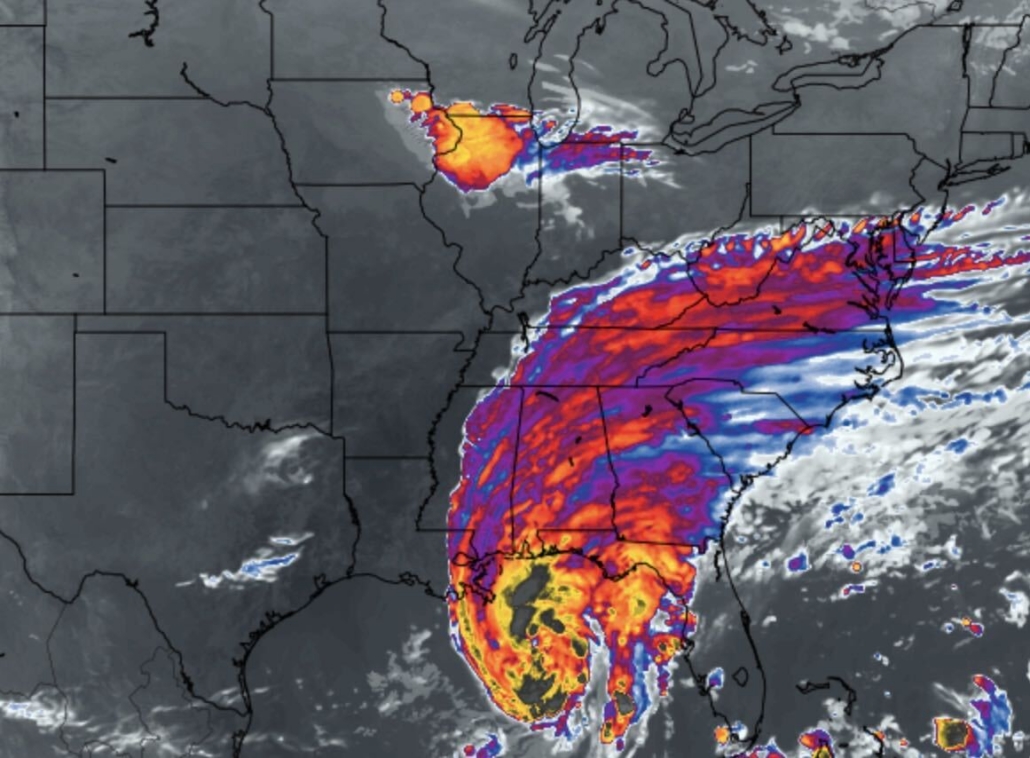
My trip to Orlando was canceled by a hurricane in a year where the Atlantic was shockingly quiet.
Nobody likes changing plans, but trust me when I say I hate to cancel flights. For me, flying is all about travel—airplanes are made to go places, so I like to do just that. As I’ve written before, I find a well-executed IFR flight to a destination 400 miles away to be more thrilling than an airshow. I’m no cowboy but I am happy to use my instrument rating; my motto is “never sacrifice safety, but sometimes sacrifice comfort to get the job done.”
I especially hate to cancel flights with passengers on board, and all four of these trips had full airplanes. That meant inconveniencing more people, spending more money on airline tickets, and juggling more complicated schedules. Still, even a stubborn pilot like me had to admit that none of these flights offered much hope. In retrospect, the decisions were fairly obvious.
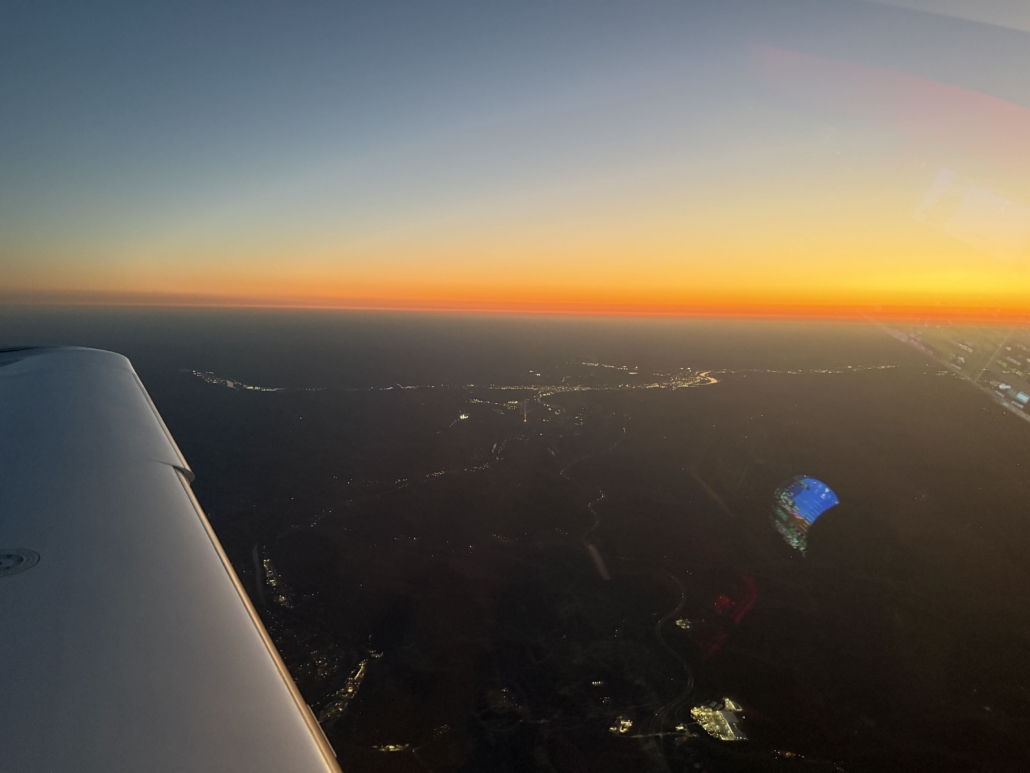
I find a well-executed IFR flight to a destination 400 miles away to be more thrilling than an airshow.
So why should you care about my summer of frustration? It’s easy to dismiss this as a bad stretch of bad luck, but every canceled trip offers a chance to evaluate our decision-making process. Debriefing a no-go decision is just as valuable as debriefing a successful flight. Here are some lessons about traveling by light airplane that I’m reviewing.
The weather always wins. I have the privilege to fly some capable airplanes, including a Pilatus PC-12 and a Cirrus SR22. These can handle some weather, and over the years I have slogged through ice, dodged thunderstorms at 27,000 feet, and landed in 40-knot winds. Unfortunately, no airplane can overcome severe thunderstorms, widespread moderate ice, and hurricanes. Sometimes you just have to accept defeat. That much was obvious when my airline flight to Toronto was canceled—if the pros aren’t going, it’s probably a clue that your GA trip wasn’t meant to be.
You can’t let frustration impact your decision-making. By the time of the Orlando trip, I was so tired of canceling that I really wanted to make the flight happen, one way or another. Get-there-itis? You bet. I was like a baseball player in a major slump, wildly swinging at every pitch in a desperate attempt to make contact—I even considered roundabout routing and ludicrously low cruising altitudes to get to Florida. That’s no way to make a go/no-go decision, though. The hurricane really doesn’t care how many trips you’ve canceled (or how much you spent on park tickets), so each decision has to be made independently. This is obvious, but it takes discipline to remove your emotions and stick to the facts when you’re staring at packed bags.
Smart pilots build in schedule flexibility. Our family specializes in fitting complex trips into busy schedules. With one kid in college, another in high school, and a demanding career, there’s often no other way—and GA makes such trips possible. The key word there is possible. In hindsight, some of the trips above were foolishly tight, often giving us no more than a two-hour window to depart. That feels like a miracle when it works, but it leaves absolutely no room for error. An ATC delay or even a slow fuel truck can ruin such carefully laid plans. Flying GA demands we build in more flexibility, and I lost sight of that. While two or three hours would not have been enough to change the outcome for me, 24 hours would have made most of these flights a go. Sometimes adding a day on either side is the right answer from the outset.
Flying GA is supposed to be fun. This is the most important lesson, but it was the last one to occur to me. If a flight is threatening to become all work and no play—for example, if you spend four days leading up to a trip stressing about weather instead of thinking about vacation—then it’s time to start driving or book Delta. Sure, flying yourself can be efficient and occasionally economical, but above all, it has to be rewarding. And yet the fun factor didn’t play much of a role in my decisionmaking.
The light bulb moment came on one of the trips that ended up as an airline flight: I noticed that as soon as I booked the tickets, I started to relax. Instead of working on fuel calculations or reviewing the latest forecasts, I took a breath and focused on the destination. What felt like a total defeat before the decision changed almost instantly to a feeling of peace. That was a sign that I had made the right decision, and probably a gentle nudge that I should have made it sooner. So I’ve added a new step to my preflight planning process: if canceling brings instant relief rather than regret, the no-go decision has already been made subconsciously. Listen to it.
Having some airline miles stored up can make the no-go GA/go airline decision a little easier.
Bonus tip: have some frequent flyer miles stored up. I am certainly not here to offer advice on the right credit card or the right airline loyalty program, and your mileage may vary on this one (no pun intended). Having said that, I’ve found that having some Delta SkyMiles stored up can make the no-go GA/go airline decision a little easier. If you can buy a last minute airline ticket with 50,000 miles instead of $1000, the decision might be a little less painful. No, the miles aren’t really “free,” but emotionally it feels that way and having this insurance policy has certainly helped me in the past.
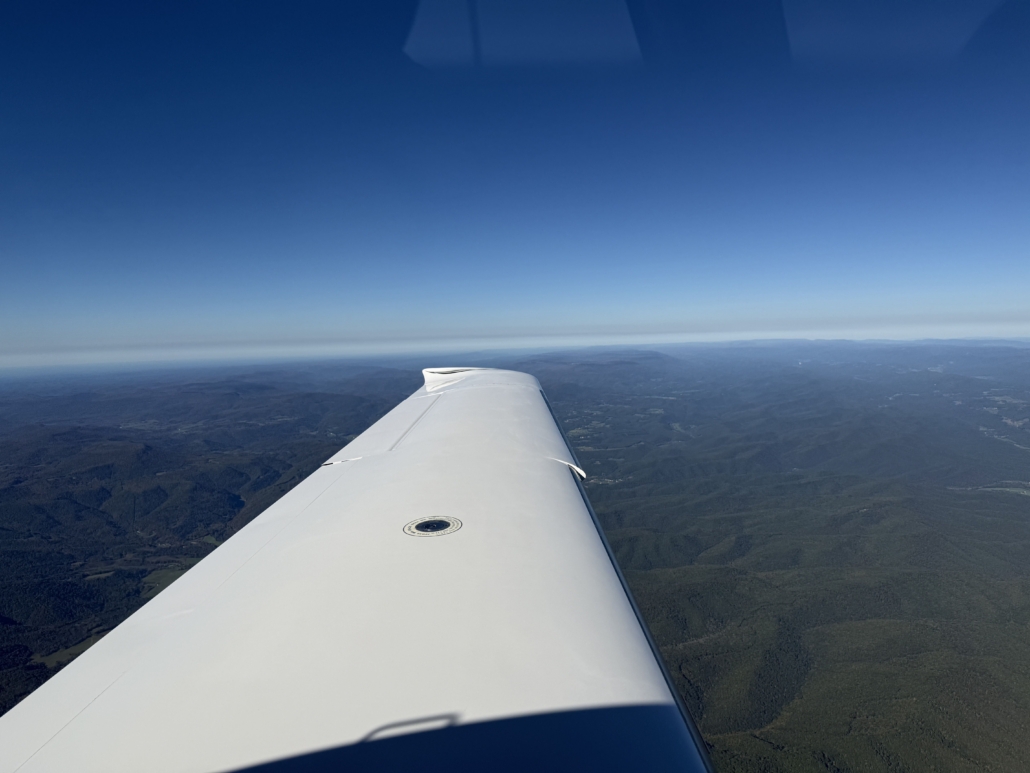
It’s not all doom and gloom with GA travel. I recently got some payback from Mother Nature when I flew an 800-mile trip in the Cirrus without seeing a single cloud or feeling a single bump. It was a spectacular day to fly, introduce a new person to the glories of small airplanes, and enjoy the freedom that only GA can offer. Watching the sun set over the Appalachians was a powerful reminder of why we put up with the cancellations, the endless weather briefings, and the backup airline plans. General aviation is magical when conditions are right—we just have to be patient enough to wait for them.
Quick reader poll

- Learning to accept the no-go decision - October 19, 2026
- Flying the Pilatus PC-12: does it live up to the hype? - July 17, 2026
- Is your flight school training you for the wrong job? - April 22, 2026


A powerful word, well written. I’m in my 50th year of flying, the last 28 exclusively in VFR only helicopters. So I have to add a double dose of “contingency planning”. For the first decade plus of answering the question whether I liked airplanes better or helicopters, I said I didn’t know; both were great. But then one day it hit me: I like the helicopter when I get to my destination, because I can fly in winds and lower clouds that ground our airplanes, but for XC I greatly miss the IFR capability of our mission’s Helio Courier! :-).
Well, said. Thanks for sharing.
John, great article. Traveling via GA poses its share of challenges. But my wife and I travel quite a bit, and we’ve found that travel itself poses challenges. We can either stay home or travel. Like you, we choose to travel.
Cancellations and delays exist with every form of transportation. Yet, for some reason, GA seems to get hammered whenever we’re forced to cancel or change plans. The reality is that these challenges exist whenever we choose to leave the house.
Just last week, we had a catastrophic weekend of airline travel. Weather caused the initial delay, followed by an extended delay due to an error message in the cockpit. The captain admitted that this particular aircraft had experienced the same problem eight times in the previous two weeks. Even the airlines aren’t immune to recurring mechanical problems.
Driving isn’t a guarantee either. We once had a very modern vehicle throw a rod during a Christmas vacation trip to visit family. The vehicle never left the state we were visiting.
I’ve found the key is to just RELAX and realize that some things are beyond our control. I think as pilots, we sometimes feel like we can control more than we practically can.
But we can control how we respond, and that’s where GA really shines. We have options. So many options.
Planned departure in the morning disrupted by fog? Leave later. Or leave the day before if the fog was forecast. Or leave the next day.
Yes, that doesn’t always get you to the planned event. But neither did the airline last week. Many passengers were stranded, missing connections and losing valuable, hard-earned vacation time.
Once you’ve considered your options and moved to Plan B, C, or D, things calm down again. I think that’s part of the relief you described after booking your airline tickets. Once you’ve accepted that the original plan isn’t going to work, there’s no reason to keep fighting it.
A delay or cancellation is not the end of the world. A bad decision can be. Live to fight another day.
And then enjoy a trip like the one we just had this weekend. A GA cross-country to Buffalo to see Niagara Falls for the first time. Leaves changing. Cool temperatures. Smooth air.
On the way home, we had enough time for a long breakfast with several friends who had all flown to meet us at an airport with a diner right across the street.
There’s no other form of transportation that offers quite that combination of flexibility, convenience, and freedom. We’re incredibly fortunate to have GA as an option.
In the end, it’s those flights, which honestly are the majority, that more than make up for the occasional trip that doesn’t happen.
Great perspective. We seek certainty in our lives and get rattled when things don’t go the way we planned. But plans rarely evolved as desired, so maintaining a flexible approach and attitude is the key to happiness.
And as you pointed out, GA is truly an incredible privilege – we are so fortunate.
What’s the old saying…. Man plans, and God laughs! Been saying that a lot in my later years now. lol
We have (almost) the same capability as the airlines in the CJ3+ job I have. However a couple days ago my pax asked if United would make it into Denver as they took off in front of the hangar and we waited. I said no because it was a 1/4 mile and indefinite 0 ceiling. They did indeed make it, to my chagrin. My airline buddy said they have 2 runways that they can do, 34L & 35R. The planes need certification, HUD & auto land. Mins are 30 ft ceilings with 400 400 300 vis. Oh well.
Great article, John.
Just as we pilots view a go around as as great decision, we should also accept a flight change or cancellation as a great execution of ADM.
I’ve cancelled several flights in the past couple of months, and have altered my plans many times to get out before the weather arrived. Understanding the drivers of the weather from a high level is the key to getting ahead of the weather. For example – me and about 120 other TBMs were in Phoenix last week for the annual TBMOPA conference. I was planning on heading back to TX today, but about 4 days ago I knew there was a trough inbound to Phoenix that would bring low ceilings, rain, icing and generally unfavorable weather to PHX. While the exact timing of the trough had some uncertainty, I was able to monitor it daily and plan our escape on Saturday in good weather. Today, as I sip my coffee and catch up on some aviation news, the TAF for my prior departure time shows BKN 1000, OVC 2000, Heavy Rain Showers, 2SM visibility. Wind 17kts gusting 28kts. I am glad we left yesterday and got ahead of the weather.
I use my app, PlaneWX to monitor all my upcoming trips in advance, to give me as much notice as possible that I might need to alter plans.
Thanks John! I’d just add a wrinkle to your frequent flyer miles advice. Given that you can cancel such bookings up until the moment the airliner door closes, why not book those well in advance so you get your seating choice, your gang stays together, and you don’t risk standby…or worse? Just don’t forget to cancel before you fire up the PC-12.
On my annual trip from Illinois to Colorado in the 182RG, I had to put down 3 times due to weather. I tried to circumvent said weather, but was unable. I never planned on getting to my destination at night , but that’s exactly what happened. I could barely see the runway, and thought that i was the last pilot of the day there. Only to have another pilot come in behind me 5 minutes later. Possibly delayed from the same issues I had…
Great advice and having pilots looking at options. Your glass is half full – Mother nature is looking out for you. With my 500 combat hours in helicopters in Vietnam, a post doctoral fellowship in aviation psychology, being a human factors consultant on US Army, US Air Force and commercial aircraft accident investigation Boards, and a researcher on spatial disorientation I have given many briefings to many pilots that “no go” and “to eject” decisions are made on the ground before the flight save lives – yours, passengers and those on the ground. The weather and physics will always win.
Terrific article. Though I’m not a pilot, I get as frustrated as the next person when my travel plans go awry. However, our world is headed into possibly the strongest El Nino pattern on record which may contribute to increasing variability in weather patterns that, if they occur, will affect all of us in multiple ways.
There is excellent coverage of El Nino and its companion force, La Nina, and their effects on weather — as well as consequences of those effects — in the magazine _New Scientist_, 17 October 2026 issue, pages 3-11.
When flying as a GA pilot or as a non revenue flight pilot, it is perhaps easier to make a ‘go-no go’ decision. Airline flying is different. You get the weather information at the flight dispatch. That weather maybe 30 minutes old. You walk to the aircraft and see that three quarters of the sky does not look friendly. Passengers are want to get going. Customer service (commercial staff) personnel want to get them moving too as they do not want hear all the obscenity calls. Now you as the PIC need to make a firm decision. To fly or not to fly. Delay or not to delay. If the decision is made to delay, then for how long . Commercial staff keep nagging and so do the passengers. They sometimes win. You talks to your first officer and to decide to continue with the flight. You end up trying to find a way through the adverse weather and curse yourself for be being intimated. It is a tough call.