
Release the Brakes: What My Flight Instructor Taught Me About Life
|
Getting your Trinity Audio player ready...
|
“Mine was born with feathers,” I said, settling the debate between my two pilot buddies who joined me for their maiden pilgrimage to Oshkosh.
That evening, after logging more than 15,000 steps wandering AirVenture, we tossed logs on the fire and sank into our camping chairs. As the wood crackled and popped, we traded stories from our student pilot days—each of us convinced we had the best flight instructor.
“He was born with feathers,” an air traffic controller had told me back in 1999 when I toured the tower in Lafayette, Louisiana, my freshman year of college. “He’s the only instructor I’d recommend. Name’s Farrell.”
“As in a feral cat?” I asked.
The controller laughed. “No, no. He’s a true gentleman. Former Air Force. You can find him at the FBO. He’s practically a fixture over there.”
I walked into the flight school and followed the sound of laughter to a breakroom filled with pilots and mechanics. Along the hallway, shirttails were tacked to the wall—each one covered in permanent marker sketches of runways, airplanes, and congratulatory messages celebrating first solo flights.
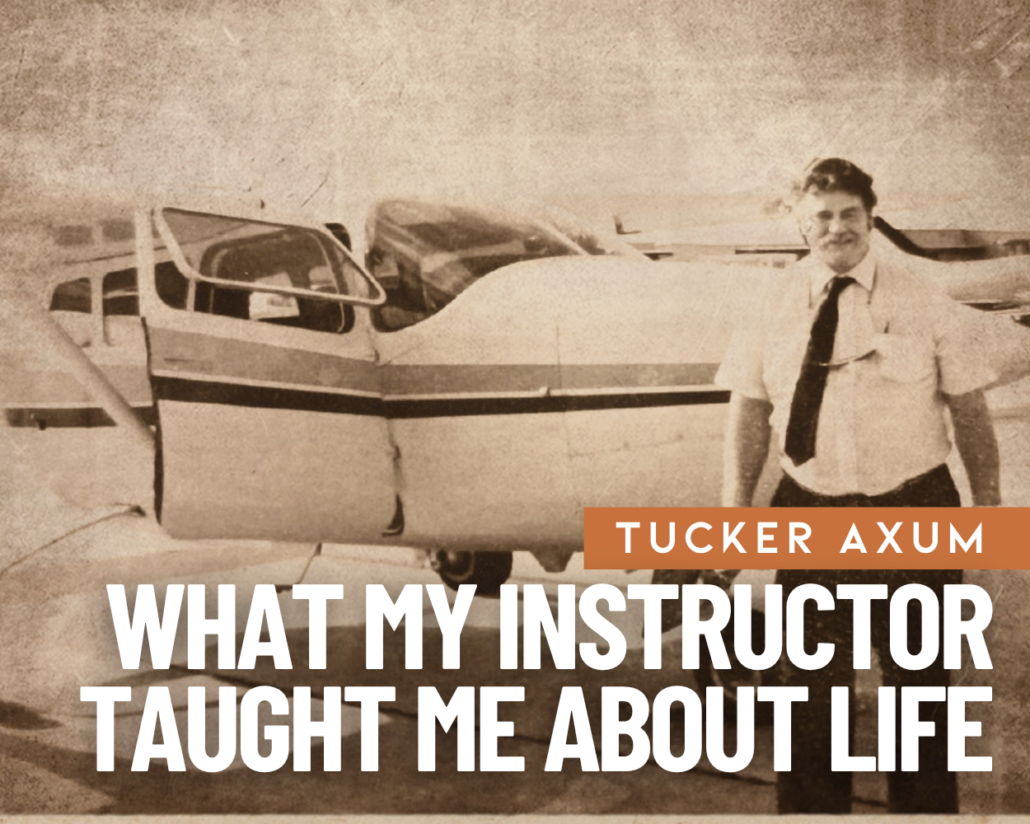
Then I saw him. A larger-than-life gentleman in gray slacks and a worn, coffee-stained button-down shirt. He looked every bit of his 51 years, but men in their 60s and 70s leaned in like schoolboys as he spun stories. A ceramic mug in one hand, a cigarette in the other—coffee and tobacco had stained brown what I imagined was once his trademark white mustache. It crossed my mind that his nickname might more appropriately be “Marlboro.” It seemed a cigarette was one of his appendages, and I later discovered he could smoke a pack with one match.
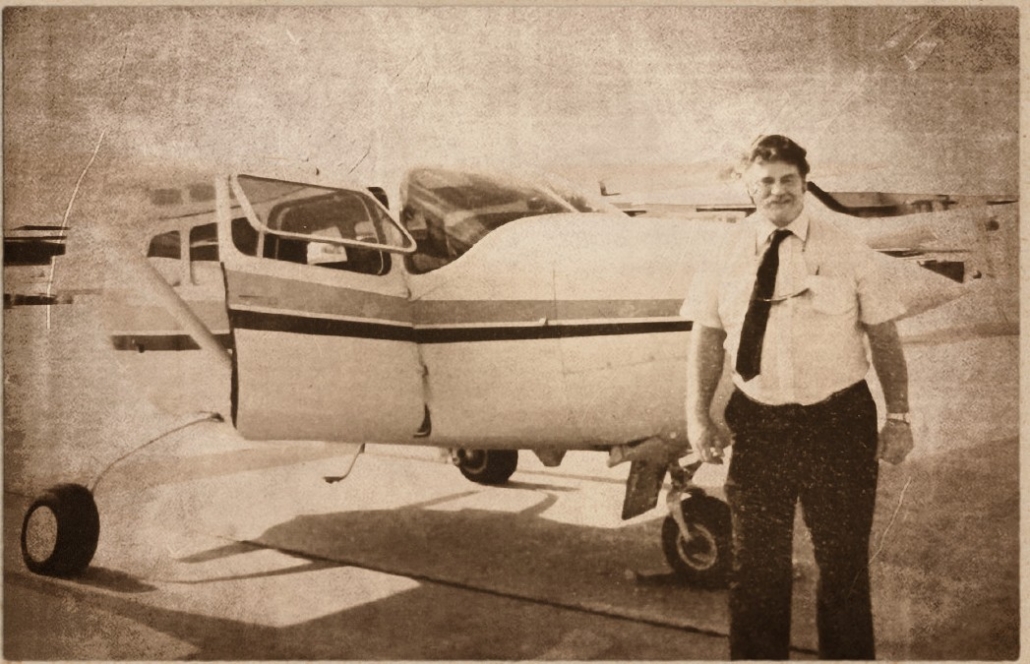
He excused himself from his adoring fans and gave me his full attention—kind, curious, and completely present. At 18, I had no idea how much this man would shape not only how I flew, but how I lived. After his service in the Vietnam War, he returned to Louisiana. When he wasn’t working as a local news cameraman or a ring announcer for wrestling matches, he poured himself into aviation—Civil Air Patrol, Gold Seal flight instructor, FAA Safety Counselor, check pilot for single- and multi-engine aircraft, and a pioneer in bringing computerized testing to South Louisiana.
But what I remember most is how he treated me. I was a broke college kid—taking classes during the day, working nights and weekends, squeezing in one or two flight lessons a month. I had completed an accelerated ground school through the Sea Cadet Corps at NAS JRB in New Orleans, but it felt like drinking from a firehose. I had the endorsement for the written exam, but I didn’t want to just pass—I wanted to excel.
Farrell taught a night class. He must have sensed where I was in life because he handed me a Jeppesen textbook and invited me to sit in for free. I didn’t miss a single session.
Class ended around eight, but that didn’t mean we were done. We’d lean against his battered station wagon—maps and approach plates spilling out from every corner—and talk for hours. And when the conversation ran dry, we’d tilt our heads back and stare at the stars, both of us silently wishing we were up there instead of down here. Looking back, he had to have been exhausted—but he never showed it. Jet fuel and kindness ran through his veins.
I’m still not sure how two husky men like us did it, but we crammed shoulder-to-shoulder into that snug “Sky Puppy”—his nickname for a Cessna 152, where the musty smell of sun-baked plastic, oil, and 100 low-lead avgas always greeted us.
“You better not spill my coffee,” he warned as he placed his chipped mug on the glare shield—filled to the brim.
I looked nervously at him. Then he formed an ear-to-ear grin. That grin told me everything would be fine. Still, I taxied slowly. Very slowly.
After the run-up, I finished the checklist and looked over. “Only one thing left to do,” he said.
I waited.
“Release the brakes.”
His words were simple. Routine, even. But the way he said them—it felt like something more. And over time, I realized it was. Get out of your comfort zone. Commit. Move forward. There’s no growth with the brakes still set.
The lesson that stayed with me most came one afternoon over the rice and sugarcane fields near Abbeville. He instructed me to perform a short-field landing at Chris Crusta Airport (KIYA), named after one of the area’s celebrated crop dusters. He told me to use the runway’s 1,000-foot marker to simulate the end of the runway.
“Roger,” I said, confident I understood.
On final, I configured early—full flaps, stabilized airspeed, steady descent. I was a little high, but everything felt controlled. Smooth. I crossed the numbers, floated, and touched down what I thought was perfectly. As we rolled past the 1,000-foot marker, I felt a surge of pride.
Then he said it.
“You just killed us.”
The words landed harder than any botched landing ever could.
“What?” I turned, stunned. That had been my best one yet.
His tone was calm—but firm. “When you realized you weren’t going to be able to land and stop within a thousand feet, I would have rather seen you execute a go-around.”
The pit in my stomach came instantly. He wasn’t wrong. This wasn’t about a landing—it was about judgment. I also regretted that I had disappointed him.
“As pilot in command, you are responsible for everything and everyone onboard.”
That lesson stuck. Not just in flying—but everywhere. To this day, I’ve never hesitated to go around when something doesn’t feel right.
“Alright,” he said after a moment, the edge gone from his voice. “Let’s go try it again.” No drama. No lingering disappointment. Just the expectation that you persevere through setbacks, learn, and do better.
A week before my checkride, we flew over Opelousas (KOPL) so he could run me through a full evaluation. After I performed all the maneuvers to his satisfaction, he handed me a pair of foggles. I put them on and the world disappeared—replaced by needles, numbers, and the steady rhythm of scanning steam gauges. He keyed the mic and asked ATC for an ASR approach. I had no idea what that meant.
For the next ten minutes, a calm voice guided me—headings, altitudes, airspeeds. No outside references. Just trust. Then she said: “Cessna 96790, you’re cleared to land.”
“Okay, hand me the foggles,” Farrell said.
There it was—the runway, perfectly centered on final. It was remarkable. Two people, separated by miles, could work together so precisely. Communication. Trust. Teamwork.
“Nice job,” he said after touchdown. “After your checkride, start your instrument rating.” Then he smiled. “A good pilot is always learning.”
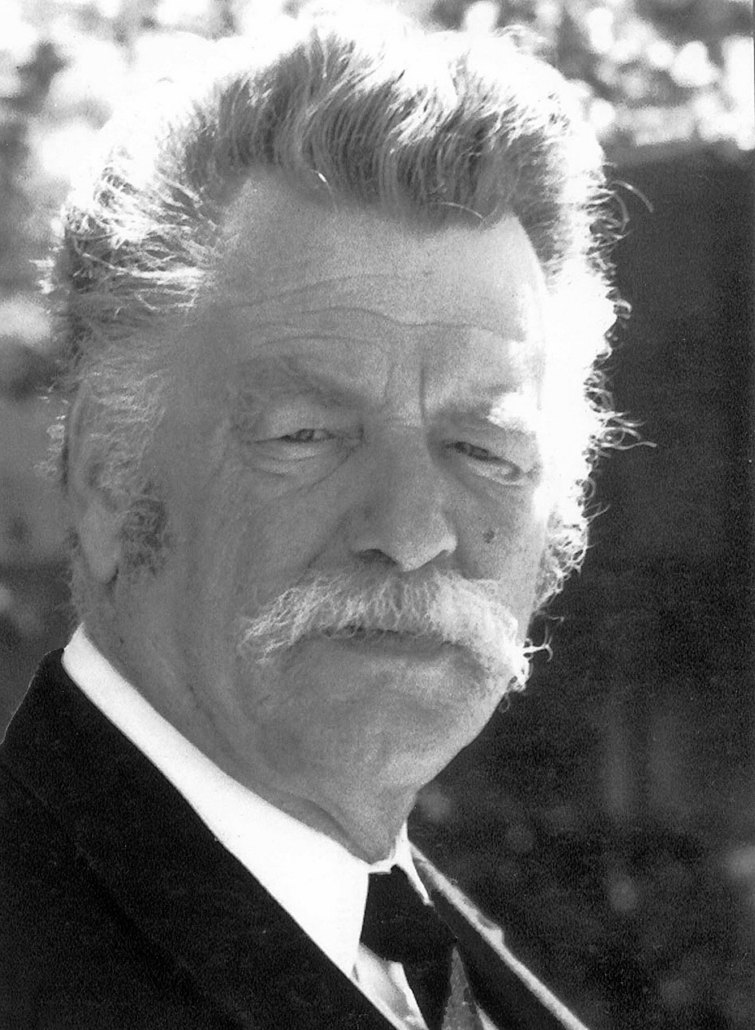 After I earned my private pilot certificate, I saw Farrell sitting on the bench that overlooked the general aviation ramp. The FBO owned it, but everyone called it Farrell’s bench. Coffee in hand. Cigarette between his fingers. Watching airplanes like it was a front-row seat to something sacred.
“The magic of flight is meant to be shared,” he said. “Take your friends. Take your family.” He then let out that deep, unmistakable laugh as if recalling an exhilarating memory. “Just don’t put ’em all in the back seat.”
It’s been twenty-five years since I first walked into that flight school. Farrell Skelton is gone now, but not really. Not when I’m in the cockpit. Not when I’m making a decision that matters. His lessons are still there—quiet, steady, and unwavering: service to others, kindness, release the brakes, take responsibility, persevere, teamwork, keep learning, and share your success. I guess you could say all I really need to know about life, I learned from my flight instructor.
- Remembering Staff Sergeant Jacob McMillan - May 18, 2026
- Release the Brakes: What My Flight Instructor Taught Me About Life - April 29, 2026
- A Higher Purpose: The Soul of a Cardinal - February 11, 2026


Very nice and touching story. I enjoyed it! Greetings from Santiago, Chile.
Gaspar, thank you for reading all the way from Santiago. Aviation really does make the world feel a little smaller.
Great story, great life lesson! Thank you for sharing it. The next Gen coming up, needs to read it. They seem to be caught up with ” glass panels” & automation, not hands on skills & positive decision making.
Clear Sky’s,
Capt Gary
N3490R
KFXE
Capt Gary, I appreciate that—and I think you’re exactly right about the next generation needing both the tools and the judgment. At the end of the day, it still comes back to the pilot in the seat. All my best.
Great story and well written. Thanks for sharing.
JW
JW, I’m grateful you took the time to read it. Glad it resonated with you. All my best.
Mine was Darryl, based out of a little airport near Reidsville, NC. 30 years and 12,000 hours later, I can still hear his drawl… “get yo’ hand on that throttle!”
Hi Jeff, I can hear that drawl just reading your comment—that’s exactly how they stick with us. Funny how those voices never really leave the cockpit. All my best.
Great tribute! Reminds me of a couple of my instructors who were military pilots early in their lives; tough but caring! Their love of flying gave more to me than a pilots license, they gave me a way to look at life!
50 + years since soloing, I still have to remember to “release to brakes!”
Hi Dan, that’s exactly it—those instructors shape far more than just how we fly. And I love that “release the brakes” is still riding with you after all these years. Thanks for reading and commenting.
MIne was my dad, WWII Army Air Corps, USAF flight instructor, FAA Operations Inspectior and Lear Jet specialist. The lesson I learned from him, “son, on any given day an airplane can kill you in 100 ways, don’t dick around with it and never stop being just a little bit afraid of it.” RIP Dad, Love you and I hear you every time I fly over 50 years later.
Hi Bart, that’s a powerful lesson—and one that sticks because it’s true every single time we strap in. Sounds like your dad gave you exactly what every pilot needs: respect for the machine and the discipline to match. Thanks for reading.
Great story, well written Tucker. Sage advice for all pilots. Mine was my dad, a 9,000 hr retired USAF fighter pilot. Spent a majority of his time in Japan and Germany sin the late 50’s sitting alert with the ADC flying scramble missions (all weather) in the F86-D against the Russians. He retired and we flew GA, I was 13 and he wanted someone to be able to land the Cherokee 6 and not loose the entire family. He was firm but unforgiving, as Tucker’s instructor said, “let’s try that again”. He was the first I wanted to take up after receiiving my PPL. On the roll out after landing, he kept looking behind us and finally asked “who I paid to grease the runway?” I was a then young adult with a family, and was so proud, I nearly burst into tears. Miss him every day, thanks for the advice and your 20 years of service Dad.
That’s an incredible story—and I think every pilot understands that moment of wanting to make their instructor (or dad) proud. Sounds like you nailed that landing in more ways than one. Thanks for reading and sharing. All my best.
Thank you for sharing this. As a student pilot starting full-time training in a couple of weeks, this really motivates me to keep going. It’s a reminder that this journey is about more than just flying.
Hi David, you’re stepping into something special—enjoy every part of the journey, even the hard days. If this piece stays with you a little along the way, then it did exactly what I hoped it would. Good luck!
Beautifully written story, Tucker, and thank you for introducing us to Farrell. He must have been very proud to see you pass your checkride!
Hi Zachary, thanks for reading and commenting. I really appreciate that. Farrell was the kind of instructor you carry with you long after the checkride is over. I’d like to think he was proud, but more importantly, I hope I’ve flown in a way that would’ve earned it. What did your flight instructor teach you about life?
Good (very) lessons. Thanks from Belgium.
Hi Ted! Thank you for reading all the way from Belgium.
Tucker great story. Mine was AJ Alee. I met him about 4 months after I got my PPl. I wanted to get checked out in a 14-13 Bellanca I had just bought. That was the start of a four year frendship. He taught me not only how to realy fly I also got my twin rating just flying around with him picking up parts for airplanes we wre working on at the time.
Hi Jeff, thank you for sharing that. AJ sounds like one of those rare mentors who leaves a lasting mark—not just teaching stick-and-rudder skills, but shaping the way we approach flying and life. I love that your twin rating came from simply flying alongside AJ on real-world adventures. Those friendships are special, and they stay with us long after the logbook entries fade. Happy Flying!
What an engrossing account! This is the kind of story that brings us into a love of aviation.
Hi Ben. Thank you so much for the kind words. Aviation has always been about more than airplanes to me—it’s about the people who shape us along the way. I’m grateful the story resonated with you. If it reminded even one person why they fell in love with flying in the first place, then it accomplished exactly what I hoped it would.