
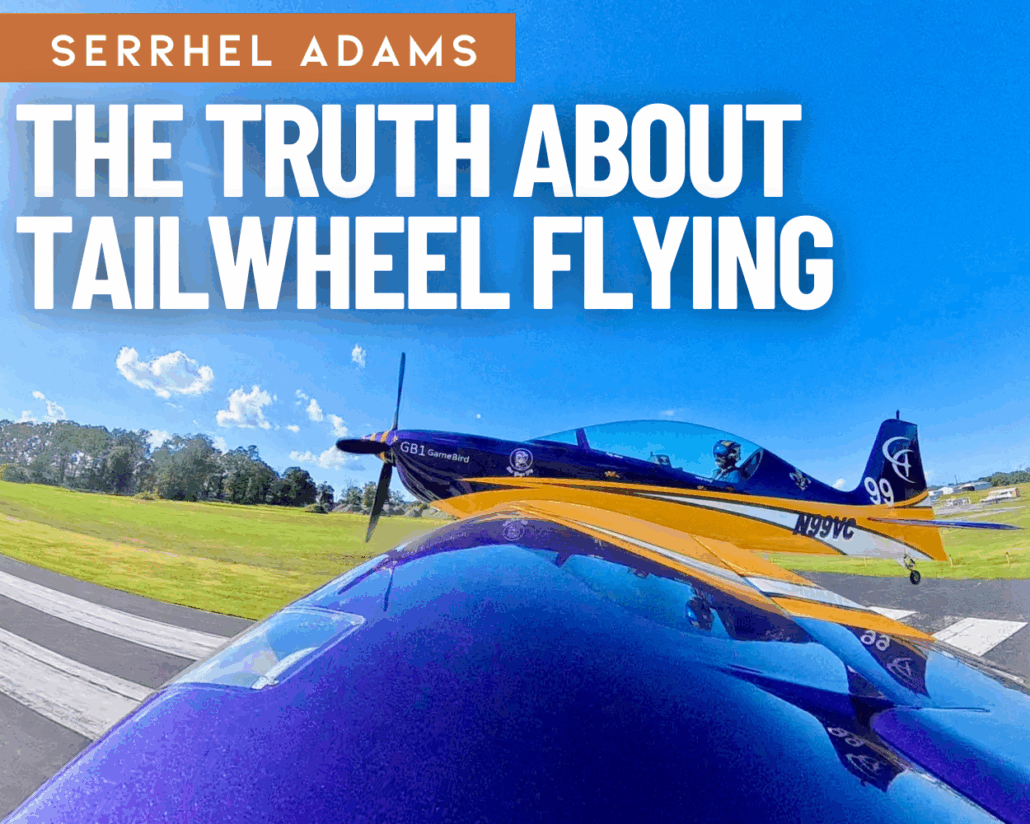
The Truth About Tailwheel Flying: Humility, Fun, and Warm FBO Cookies
|
Getting your Trinity Audio player ready...
|
I am a low-time tailwheel pilot, having just surpassed 500 tailwheel hours. As I have shed the training wheel of a lowly tricycle-gear pilot, I can now answer many questions that burn in the minds of current tricycle-gear flyers as they dream of getting the much-coveted tailwheel endorsement.
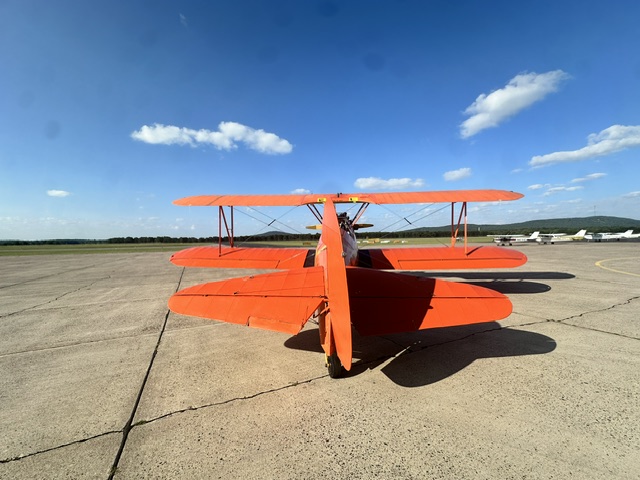
I’m a low-time tailwheel pilot having just surpassed 500 hours.
The first question I am sure every tricycle pilot asks themselves is, “Will I, as a tailwheel pilot, be a better pilot than all of the tricycle brethren?” The answer is “Yes, of course.” Tricycle pilots will bow down to your awesome flying skills. They will no longer be able to look you in the eye, as the glow from your precision rudder control blinds them.
The second question every tricycle pilot asks themselves is, “Will all tricycle-gear pilots be envious of me and yearn to be as cool and adventurous as I am when I step out of my grand tailwheel aircraft at my local airport?” Again, the answer is a resounding “yes.” They will watch you walk by in your distressed leather jacket, white silk scarf streaming in the wind (tailwheel pilots always walk into a direct headwind to achieve this effect). They will dream of becoming you one day. They will covet the groupies who follow you into the FBO as you receive your free warm chocolate-chip cookie, reserved only for the conventional-gear pilots.
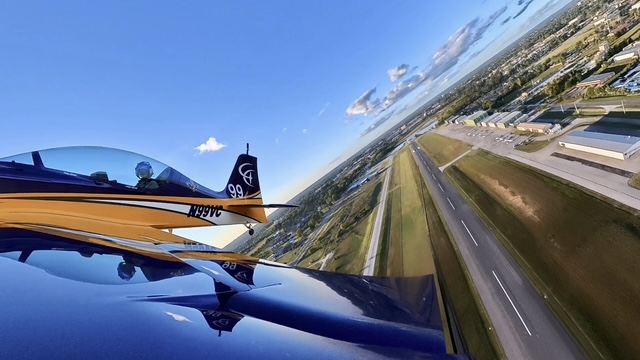
Tricycle gear pilots will dream of being you one day.
The final question tricycle-gear pilots ask themselves is, “Will my tailwheel plane be the coolest of the machines parked on the ramp?” Again, a resounding yes. Your machine will be cooler than Fonzie’s motorcycle. That is the real reason tailwheel aircraft point their noses in the air while on the ramp: they look down upon all those other inferior machines impersonating a wheelbarrow that surround them.
Obviously (I hope), you realize all of the preceding is in jest. I do not fall in the “I’m better than you because I fly X and you fly Y” camp. There seems to be more than enough of this in the flying world. But I do encourage everyone to get a tailwheel endorsement, as you will be guaranteed to learn one important thing: humility. As a tailwheel pilot, you will become a much more humble pilot. Believe me, any time you think, “I am a tailwheel pilot, I am special,” your tailwheel aircraft will remind you that you are not “all that.”
When asked about learning to fly a tailwheel, I have two comments I always share:
-
You never tame a tailwheel. You just earn its respect.
-
When it comes to landing a tailwheel (and really any plane), you need to re-evaluate the “game.”
a. A successful landing is a “tie.”
b. A go-around is a “win.”
c. Don’t ever learn what a “loss” is.
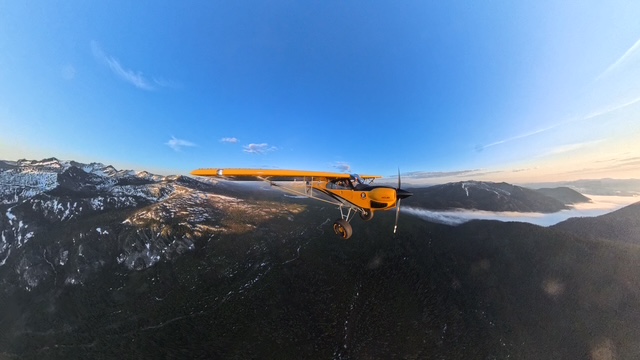
Every takeoff, departure, approach, and landing in a tailwheel will earn your full respect.
Every takeoff, departure, approach, and landing in a tailwheel will earn your full respect and attention. Every one. The one time you choose not to respect your aircraft, it will remind you who truly is in charge. I assume I’m going around on every approach, and I accept a landing only when all variables will keep my aircraft happy and on the centerline.
Go get the tailwheel endorsement. It is worth the effort. Get it to test your proverbial stick-and-rudder skills. Get it to shake the dust off your feet. Get it to slow down your flying. Get it to simplify your flying. Get it to check your ego. A tailwheel endorsement will provide you with much more than you know.
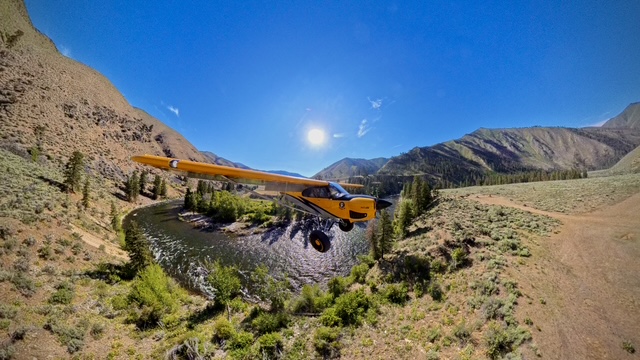
Most importantly, get your tailwheel endorsement for fun!
But most importantly, get your tailwheel endorsement for fun! Once you have that endorsement in your logbook, you will have access to some of the best flying opportunities afforded to a pilot. The nature of tailwheel aircraft makes them some of the most fun machines to fly. In my humble opinion, there is no better flying than what is available in a tailwheel. Here are just a few examples:
A J-3 Cub with the door open, down low on a beautiful morning with light fog over the landscape. Cars move faster than you. No distracting glass cockpits. Just flight in its truest form. It is so much fun to fly low and slow enough to see someone wave at you—and to see their smiles when you wave back.
An open-cockpit flight of any kind. There is nothing like flying with the wind in your face. The sights, sounds, and smells of flying a Stearman over the countryside cannot be experienced any other way. One of my most memorable flights involved wingovers and aileron rolls in the Columbia River Gorge at sunset in a Waco. What an amazing flight!
A high-performance tailwheel takeoff and landing. I received a “great takeoff” from the tower leaving AirVenture last year in a GameBird with the smoke on. My wife in the front seat commented she could see the smile on my face even though she couldn’t see behind her. She was right. Truly exhilarating!
Flying any vintage warbird, dreaming of that white silk scarf blowing in the breeze. It is the dream of those airplanes that drove so many of us to the skies in the first place. Honestly, do you want to miss an opportunity to be on the controls of a T-6 or a P-51 because you’ve only ever driven a plane with a wheel in the front?
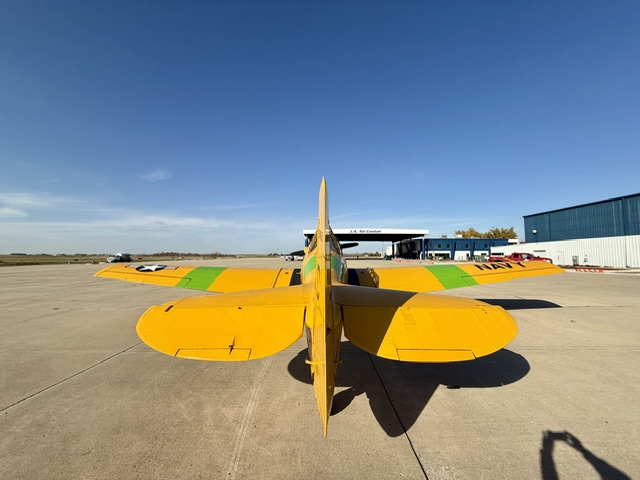
The dream of flying a warbird is what drove so many of us to the skies in the first place.
I’ll be zipping up my leather jacket and wrapping the silk around my neck now. I will leave you with a wink and a nod as I settle into my seat, face pointed at the sky. As I lift the tail and fly off past the horizon, I’ll encourage you once again: go expand your horizons. Get that tailwheel badge. Wear it with honor. Soak up the glory all others will bestow upon you on the ramp. You will be part of the brotherhood, with the warm cookies waiting for you. You do not even need to worry about your ego getting too big. That little wheel behind you will always be there to bring you back to reality.
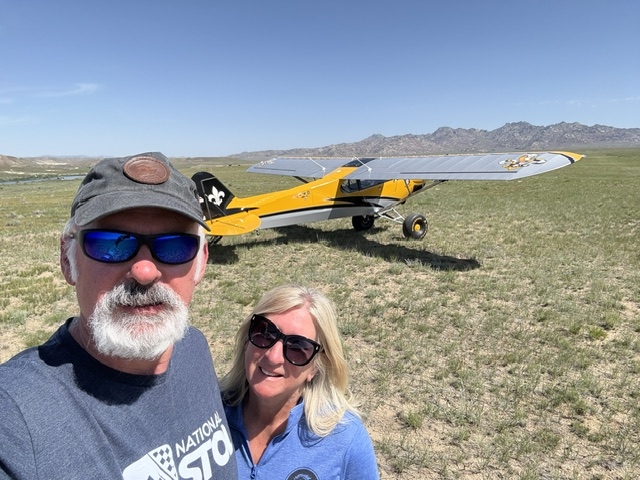
Go expand your horizons—get that tailwheel badge.

- Friday Photo: Spitfire Over St. Louis - December 26, 2025
- The Truth About Tailwheel Flying: Humility, Fun, and Warm FBO Cookies - December 19, 2025
- Friday Photo: Backcountry Airstrip - November 28, 2025


What more need be said? We’ll, perhaps this; Serrhel has it right, but tactfully stops short of plainly saying that the tiny, sometimes not so tiny shot of adrenaline that accompanies a tailwheel landing approach and the opening bell of a boxing match are the source of much of the attraction. Coming through without a missing landing gear, or a broken nose is a huge draw.
Great article! Very entertaining and inspirational. Tailwheel flying is so much fun!
How could you write an article about flying a taildragger without mentioning the hoary phrase “those who have done a ground loop and those who will do a ground loop”?
Nothing beats tailwheel flying! I bought a Stearman in 2010 and have never looked back. I’m now a CFI specialising in tailwheel training – come fly with us this winter in a Citabria 7ECA or WACO YMF-5. Escape the cold…it’s 80 degrees today and we’re off to the beach . Check out https://www.stickandrudderschool.com/what-we-offer
After 30 years of teaching in tricycle gear aircraft, I was stale and ready to hang up the headset when my wife urged me to try tailwheel flying. That reignited my love of flying and I continued to instruct for almost twenty more years. Teaching from the back seat of a tandem tailwheel plane is both fun and exciting. Every takeoff and landing is indeed an adventure.
Hello Bob,
Back in 2009 you tutored me on the finer points of Cessna 120 handling. I’m from the UK and had just purchased a 120, having received my tailwheel endorsement in a Decathlon.
During a few days lay-over in Las Vegas, I drove down to Falcon Field for an early start and enjoyed immensely the professional and laid-back confidence building you gave.
I’m now about to rack up my 2,000th hour on GA, since 2007, 1,600 of then in my 120 !
Cheers Bob.
In all my years of tailwheel flying, the closest I ever came to a groundloop was in a Super Cub that lacked the tailwheel response and brakes that I was used to in my glider towing. I had a large friend in the back seat who knew exactly what was happening and laughed like a drain all the way. I managed to hold it, but only just.
I learned to fly in an Auster (see my post in this series) and vividly remember my first takeoff. The Auster starts flying early, and I managed to haul it off the ground to stop the banging noises underneath as we skipped across the grass.
There’s nothing quite so sweet as that perfect transition from flying to all three wheels brushing the grass …
My first tailwheel flight came in 1974 as a young Air Force pilot with about 250 hours total, all in tricycle single- and twin-engine jets. I went to the Army flying club at Ft. Wainwright, AK and saw an L-19 Bird Dog on wheel-through skis and said, “That one!” The instructor started by telling me how the stick worked but that was the only control that I knew at the time. We took off, did three trips around the pattern and I was a tail wheel pilot. There were no endorsements back then. Neither do I have Complex nor High Performance endorsements, all accomplished before they were requirements.
And never in my 52+ years of flying as anyone, ever, stopped on the ramp to take a picture of my airplane until I acquired my Cessna 180K! And I wonder if I’m the only tail dragger pilot who’s never ground looped? I’ve NEVER been more than 90 degrees to the takeoff runway (and in the grass)… I love my 180!
I did write an answer but it failed to post. Thank you
Having witnessed often awful or pathetic landings made by tri-cycling pilots, e.g. pushing the stick down to force the touch (inevitably on the front gear) usually followed by several bounces to try and rectify the situation, just to make it worse, or bad applications of rudder, etc. I cannot help myself to advise those in command to go up rapidly with an instructor on a tail wheel aircraft ( what I like to call the classic machines.) On top of the many resulting pleasures splendidly promised in Serrhel’s article, for me the main benefit of this is learning the three phases of your landing : first the approach -keeping speed constant till the chosen spot (learning this without flaps (J3) and initiating skidding to lose altitude if necessary) ; second, learning to fix the horizon straight ahead to maintain a constant level as you lose speed by pulling gently on the stick and keeping it pulled until the plane will stop flying and decide to land by itself. I maintain this is the first benefit of flying tail wheels, a skill that you will have acquired for the rest of your flying experience. This will make you a better pilot on any future landings because you will have achieved, once and for all, to respect the 3 phases of landing; and also you will have leant the use of the rudder and physically feeling why. I always suggest to any new PPL to try immediately flying with an instructor that way. The skill should be with you over a few flights. Of course, if the pilot discovers the fun on tail wheels, there are thousands of possibilities to find grace and manners in the air that were never thought possible until that endorsement is in your logbook.