
When Special VFR Is the Right Call

|
Getting your Trinity Audio player ready...
|
In VFR flying, the term Special VFR (SVFR) often carries a certain mystique. For many pilots, it’s a topic covered briefly in ground school, usually with a half-joke: “You can, but why would you?” Most pilots are taught to wait it out, divert, or transition to instrument flying. However, SVFR has legitimate and safe uses—especially when weather is marginal but improving. I experienced this firsthand departing KJQF (Concord-Padgett Regional Airport), under a stubborn 900-foot ceiling, and it reshaped how I approach and teach SVFR with my students.
What is Special VFR?
SVFR is an ATC authorization that allows a VFR aircraft to enter or depart controlled airspace (Class B, C, D, or E) when weather is below basic VFR minimums—specifically when visibility is less than 3 statute miles or the ceiling is below 1,000 feet.
To qualify, pilots must:
-
Maintain at least 1 statute mile flight visibility
-
Remain clear of clouds
-
Request the clearance (ATC will not offer it unsolicited)
-
Operate only within the surface area of controlled airspace
-
For night operations, be instrument rated in an IFR-equipped aircraft
ATC may approve SVFR if separation from IFR traffic can be assured and workload allows. Coordination with adjacent facilities, like approach control, is often necessary—particularly for departures.
The Flight
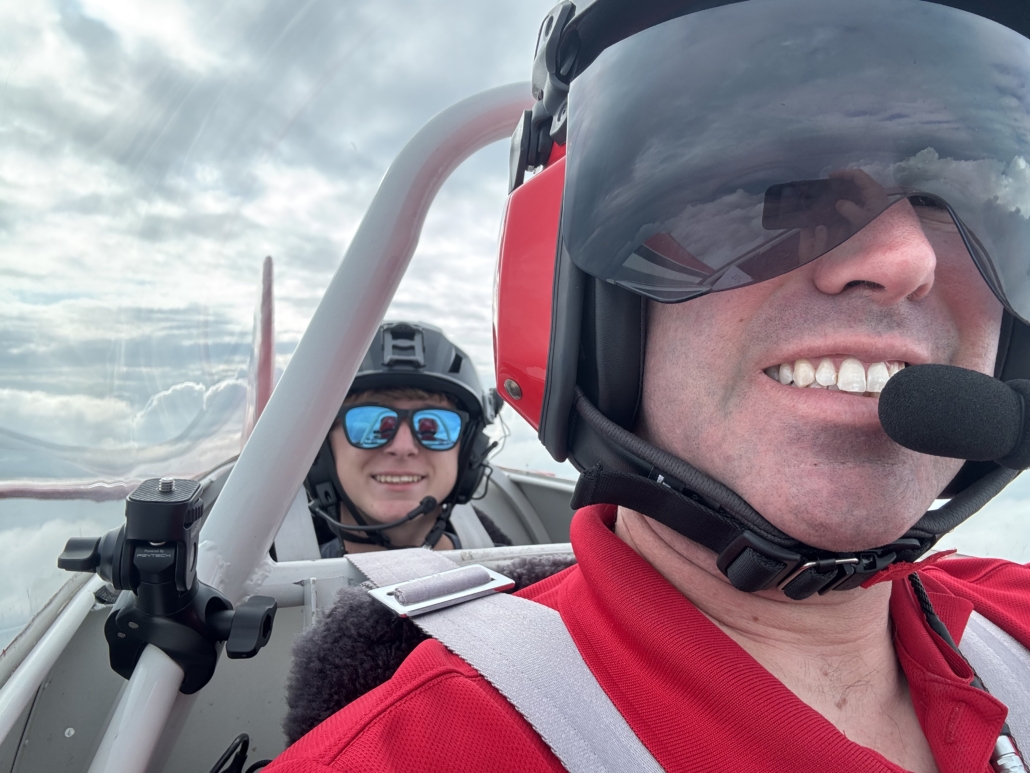
In early June 2025, I flew my son in our RV-4 from North Little Rock, Arkansas (KORK) to Concord, North Carolina (KJQF). He would be spending a few weeks with family, and I planned to return the next morning before a low-pressure system from the coast moved in.
The morning forecast was VFR, but conditions were expected to deteriorate to Low IFR mid-morning, improving to Marginal VFR just before sunset. My RV-4, built in 2003 with a basic six-pack and VOR/LOC receiver, is IFR capable—but I avoid flying it in IMC. While I have extensive IFR experience, I didn’t want to start using this aircraft in instrument conditions.
At 5:30 a.m., I awoke to light rain—the forecast had arrived sooner than expected. By midday the rain had tapered, but the ceiling stubbornly remained at 900 feet. Visibility was excellent, around 10 miles. A check of nearby METARs showed clear skies just a few miles north, with ceilings above 5,000 feet and improving.
I realized this was a classic SVFR moment. I didn’t want to file IFR. Conditions were VFR just outside the Class D surface area; the only obstacle was the low ceiling at KJQF. I knew I could maintain legal visibility and remain clear of clouds if I carefully chose my departure route.
Planning the Departure
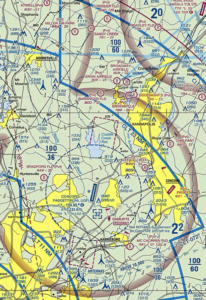 I reviewed the sectional chart and ForeFlight obstacle database. A reservoir and north-south road just north of the field provided a clear path, avoiding tall towers to the northwest, some exceeding 1,000 feet AGL. Identifying clear, easily recognized landmarks allowed me to keep my eyes outside while maintaining situational awareness and clearing obstacles or traffic.
With a route planned, I requested a Special VFR departure to the north from KJQF Tower. Because of Charlotte’s Class B airspace, coordination with Charlotte Approach was necessary to ensure my route didn’t conflict with IFR traffic. After a few minutes, clearance came through:
“On departure, maintain Special VFR at or below 2,000 MSL.”
I acknowledged, entered my squawk, reported ready, and lined up on runway 2.
Under the Clouds
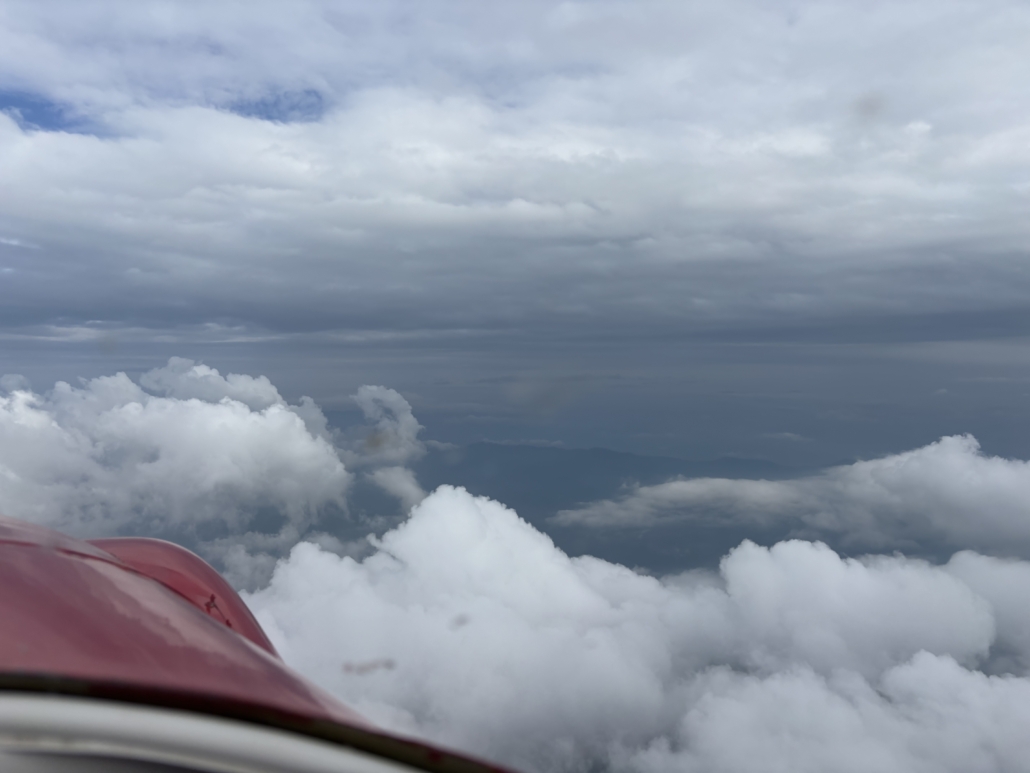
Climbing out under a 900-foot overcast felt like most IFR departures, except I leveled off around 700–800 feet AGL, just below the cloud base. Speed perception was intense—flying just under the clouds feels much faster than it is. Following my planned route north, visibility remained excellent. About four nautical miles out, the clouds began to break; by five miles, blue skies stretched overhead, with a scattered ceiling above 5,000 AGL.
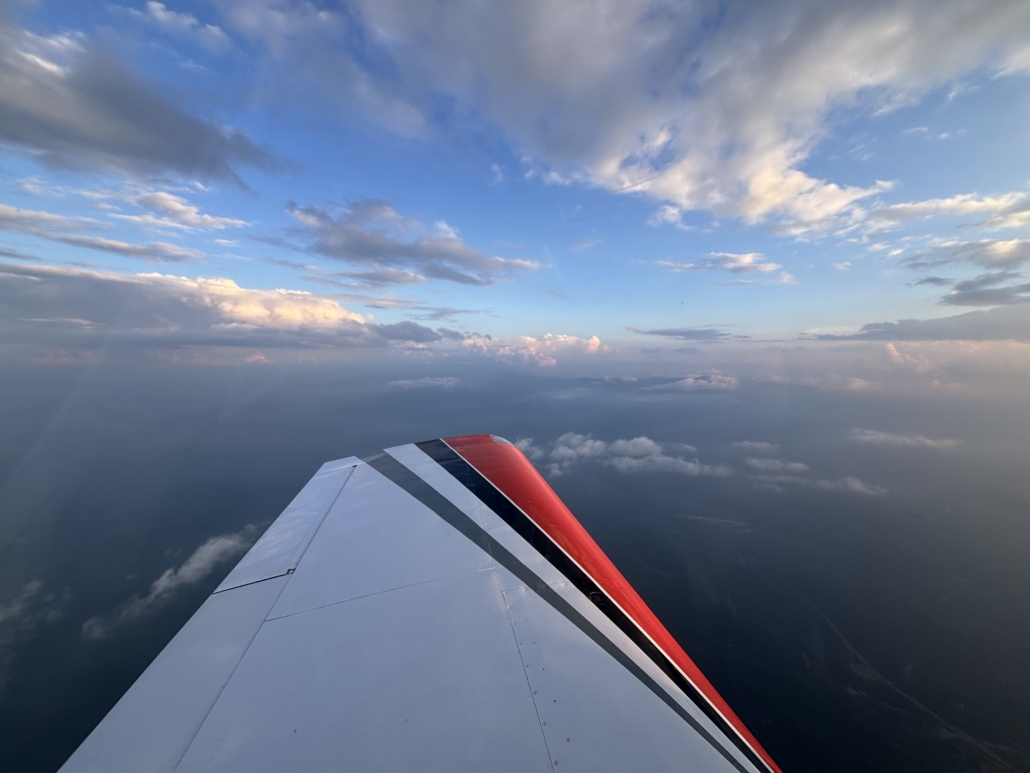
I checked in with Charlotte Approach, advised them of my position, and continued climbing VFR. Once the 2,000 MSL restriction was lifted, I climbed to 4,500 feet MSL in clear skies. The remainder of the flight back to KORK was smooth. I navigated around a few isolated thunderstorms using ADS-B In and ATC, stopped for fuel in Ellington, Tennessee, and arrived home before midnight.
Lessons Learned
Before this flight, SVFR had always been an academic discussion topic. I would tell students, “You can do it, but you probably never will.” That’s no longer my stance.
Key takeaways for safe SVFR operations:
-
Planning is critical. Study your route, check surrounding METARs, and identify obstacles and landmarks.
-
Visibility and clearance are your responsibility. ATC does not guarantee obstacle avoidance—you remain VFR.
-
Have an out. Know when you’ll turn back or climb into IMC (if rated and equipped).
-
Use SVFR only as a tool. It’s not a shortcut through deteriorating weather. Proper study and risk mitigation are essential.
My flight out of KJQF was a textbook SVFR operation: weather north of the field was improving, visibility was excellent, and my route was carefully planned for safe clearance. For instructors and pilots alike, it’s important to move past the “you can, but why?” mentality. Special VFR isn’t for every day, but when conditions are marginal and planning is meticulous, it can be exactly the clearance you need.
- Task Prioritization in a C-130H Emergency - January 19, 2026
- When Special VFR Is the Right Call - October 1, 2025


Agree with SVFR utility if prepping as in article, benign terrain or at least good local knowledge, good viz or ceiling (at least one of those) and implied but not called out, a razor sharp defined ceiling with nothing hanging below (i.e. no few or sct layers)…anything hanging below that low ceiling puts you in a corner very quickly if those “few” or “sct” start to clump together, upping challenge to safely avoid or return. METARS are just points, so they may not provide a warning of clumps down the road…
Agreed, Rich. Thats why planning and study are imperative. Thanks!
Thank you! That is a great SVFR briefing and application. The weather is so often great VFR at Cheyenne, WY, KCYS, that when it is below basic VFR people forget about SVFR! Yet, often a few miles south or east it is severe clear. Even in the winter time, one can see the forecasted snow moving in from the north to the south, and I can see that I would be on the ground and at the ramp before the snow gets onto the airport. Yes, tied down on the ramp, enjoying a cup of coffee when the snow starts. Thee were a lot of unnecessary VFR and IFR diversions that day. My first instructor taught me and we used SVFR late in my PP-ASEL training in 1975.
Thanks Gerald. I find a lot of folks know the visibility and cloud clearence requirements for VFR, but most hesitate (for good reason) to get close to them. Knowing your personal limits is key. Thanks!
Do you also file an IFR flight plan prior to departing in case conditions deteriorate?
If he filed an IFR plan, I don’t really see why he would try for SVFR. I may be wrong though. I am not super sure on how IFR works.
The IFR is a good backup if the SVFR is a bit marginal, but the IFR clearance may take you on an lousy path compared to the SVFR which gives more flexibility
This is an option, Mark. I would argue however if you can take an IFR clearence then its probably best to do just that from a safety standpoint point. However, if you cannot take an IFR clearence SVFR is a good option in some cases. I’m not sure of any benefit in filing IFR and then flying SVFR as you could request a pop up clearence if needed from ATC. If you have doubt that you can make it SVFR, its best to not try and find an alternative instead. Thanks!
How do you stay “1000 feet above the highest obstacle within 2000 feet” over a congested area if you fly at 800’?
I get how the SVFR clearance mitigates the visibility and cloud clearance requirements for VFR flight, but it does not cancel FAR 91.119.
Mark,
You need to take into consideration the first sentence of the regulation.
91.119 ” Except when necessary for takeoff or landing…….”
SVFR is specifically utilized during take off and landing operations per 91.157.
Great question Mark, and I think William answered it already. In this particular case, my course to the north of JQF did not take me over congested areas, so the 500’ rule was all that would apply. Plus, 2000 feet of lateral distance from an object is really just 1/3 of a mile, which is closer than most folks fly a downwind. In each case, I don’t recommend flying SVFR for an extended period of time and only to get into and out of an airport per 91.157. Thanks!
Back in the early ’70s a fellow AF pilot, his visiting brother, and I wanted to fly to Chena Hot Springs and Ft. Yukon in Alaska but the local weather around Fairbanks was stinko. We barely had a mile of visibility in fog and we had access to a Cessna 172 and a 150. We asked Ft Wainwright tower for clearance to take off as a flight of two and were denied, saying that only one aircraft could be airborne in the Airport Traffic Area (Class D nowadays). We agreed to meet over the river south of the airport, flipped a coin (I lost the toss) and my buddy took off solo in the 150. When he reported clear, I was cleared to take off with his brother as my passenger. It was bright sunshine for the rest of the day, only the Fairbanks area was socked in.
That’s the only time in 52 years that I’ve used SVFR and these days, there’s no destination that can’t wait until the weather clears. No more night or IFR in my Cessna 180K.
Great story, Dan. We each balance risk differently. I would not advocate that anyone should push beyond their personal minimums. In some cases though, SVFR is well within a pilots abilities and proper study can lead to a positive outcome. Thanks!
Agreed, SVFR is a useful tool, however improving is not always necessary. I’ve had a few times where SVFR was faster than and IFR clearance and could get in before the wx got nasty, but gotta be careful. In that situation I really want it to be a sure thing, like having the airport in sight or close. (a contact approach often works as well).
However, improving wx is safer, like a lifting fog bank the low ceiling as the op mentions.
In my several 1000s of hours I’ve used it quite a bit.
Thanks, Larry. I have met people that have used SVFR a lot and others who would never use it. I was glad I had an opportunity to use it and learn from it. It’s now a tool I may use more often when it makes sense. Fly safe!