
Spatial Disorientation: I Thought It Couldn’t Happen to Me
|
Getting your Trinity Audio player ready...
|

I voraciously consume aviation content—articles, podcasts, and accident case studies. Every crash is tragic, but understanding how a pilot ends up in trouble can teach the rest of us how to stay out of it.
I’ve read countless NTSB reports attributing accidents to inadvertent VFR into IMC and spatial disorientation. Often, the pilot was instrument rated—trained and certified to fly in the soup—yet still lost control. I used to wonder: How could an instrument-rated pilot lose control in IMC? That wouldn’t happen to me—I fly IFR regularly.
I was wrong. And I’m fortunate to be able to write this article and admit that.
My wife and I had planned a long weekend at the Nemacolin Resort in Pennsylvania, just outside Pittsburgh. I was excited—not only did the resort look fantastic, but it had its own landing strip: PA88. I told my wife how amazing it would be to land right on the property.
Mistake #1: A perfect setup for get-there-itis.
The airstrip is VFR-only, and I knew I’d need good weather. Adding to the pressure, my wife is a reluctant flyer. She’ll go along to get somewhere, but she doesn’t enjoy it.
The weather that day was classic summer: hot with scattered thunderstorms. I reserved a rental car at the Morgantown Municipal Airport (KMGW)—the nearest airport with services—as a backup, but I really wanted to land at PA88.
We departed late morning. The forecast was promising, with storms projected north of our route. It looked like we could avoid them by taking a more southerly path. As it turned out, we spent the first half of the flight dodging storms. Stressful—especially with my wife onboard—but manageable.
The plan was to refuel at KMGW, then make the short 17 nm hop to Nemacolin. But approaching Morgantown, a storm cell was converging with our arrival. I diverted to the Johnstown Airport (KJST) instead and landed there around 12:45pm.
The weather at KJST was fine, but storms were rolling into both KMGW and Nemacolin. I checked radar and called Nemacolin Unicom. A convective SIGMET was active but forecast to expire around 3:00pm. I figured we could wait, then depart around 2:45 and be on the ground at Nemacolin by 3:30.
Mistake #2: Assuming a short VFR hop would be easy.

I shouldn’t have assumed a short VFR hop would be easy.
After lunch, radar looked better and Nemacolin Unicom reported the field was wet but usable. Skies at KJST were still good. I did a quick preflight and launched VFR.
The MSA in that area is 3,800 feet. I climbed to that altitude, but clouds ahead were lower. I should have returned to KJST or requested a pop-up IFR clearance to KMGW. Instead, I pressed on, descending lower and lower in hilly terrain—dangerously close to the ground.
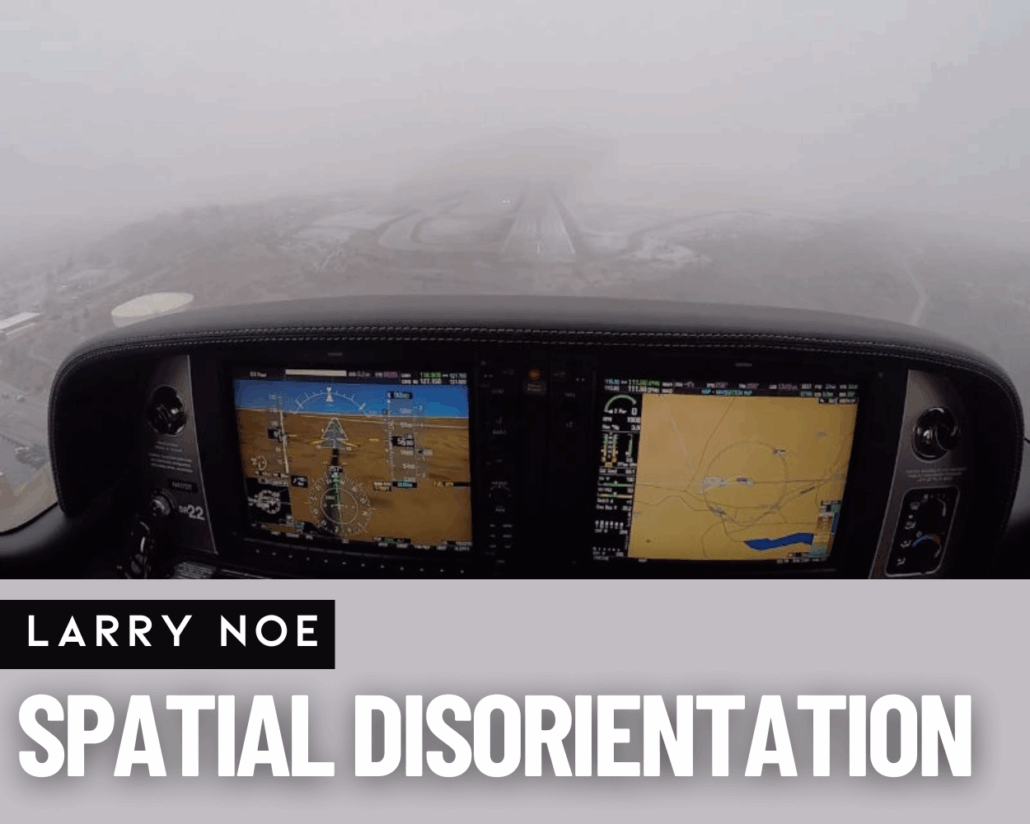
Then came something I’d never heard before: the Terrain Warning System. I began climbing to get between layers, intending to stabilize and then request IFR. But as I entered the clouds, what I thought could never happen did.
I was in an unusual attitude: 45 degrees banked and nose down.
For a moment, I considered pulling the CAPS parachute. I had often wondered if I’d have the presence of mind to use it in a real emergency. After this, I know the answer is yes. But I also realized I could recover. Thankfully, my unusual attitude training kicked in. I focused on the instruments, leveled the wings, and recovered to straight and level.
Looking back, I didn’t even think about pressing the LEVEL button—likely the best option in hindsight.
I climbed to a safe altitude between layers, engaged the autopilot, took a breath, and called TRACON for a pop-up IFR clearance to KMGW.
I felt awful. This was 100% avoidable. And for what? The convenience of landing at a resort strip rather than flying to an instrument-equipped airport and driving 45 minutes? I had put myself—and my wife—in unnecessary danger.
What I Learned
-
Spatial disorientation is real. It can happen to any pilot, regardless of hours or ratings. You often don’t realize it’s happening until it’s nearly too late.
-
Unusual attitude training is invaluable. Hood work for ratings and flight reviews isn’t enough. In real training, you don’t know it’s coming—the surprise matters. I believe that training helped save my life.
-
Get-there-itis is insidious. I ignored multiple warning signs. My decisions were influenced by convenience and pressure rather than safety. I won’t let that happen again.
Flying is a privilege that demands humility. I was lucky this time—and I hope my story helps another pilot avoid the same mistakes.
- Spatial Disorientation: I Thought It Couldn’t Happen to Me - September 29, 2025
- I damaged my airplane. Now what? - September 26, 2019


Nice article and worth the read. Thank you for posting.
would like to hear from other pilots on this matter. I am 77 years old and have over 6,000 hrs with much IFR experience.
Although I would never scud run and past up opportunity to file IFR, I was fascinated with the “that can’t happen to me ” scenario. how many hours of IFR flight did this author have? Does he take auto pilot off in actual regularly?
Doug
Thanks for your comment. Prior to this incident, I felt the same as you, I would never scud run and I have about 210 hours of actual or simulated instrument time. But I did. I had the autopilot on but turned it off when I wanted to climb and pick up my IFR clearance. That is when I became spatially disoriented. I did recover but in hindsight, I wish I had pushed the level button to recover.
Five years ago, I reported on the LVL button for spinal recoveries. (https://airfactsjournal.com/2020/08/recovery-from-spirals-with-the-lvl-button/). The first sentence of that article was, “In a flight in a Cirrus SR22, it was mentioned in passing that the LVL function on the Garmin autopilot is not taught for unusual attitude recovery.”
Not that it’s directly on topic, but as I have been recovering my IFR skills after medical events, I’ve found the LVL button wonderful for giving me the few seconds I need to figure out what the airplane/autopilot are doing (translation: what I did wrong) and giving me time to recover situational awareness and punch the correct buttons.
This is a great article showing just how easy it is, to find yourself in that chain of events. Fortunately you had the training and experience to recognize the situation. Also flying a plane where everything happens fast just adds to the pressure.
Great article, it takes a lot of courage to tell others about a mistake, but it helps us all!