
|
Getting your Trinity Audio player ready...
|
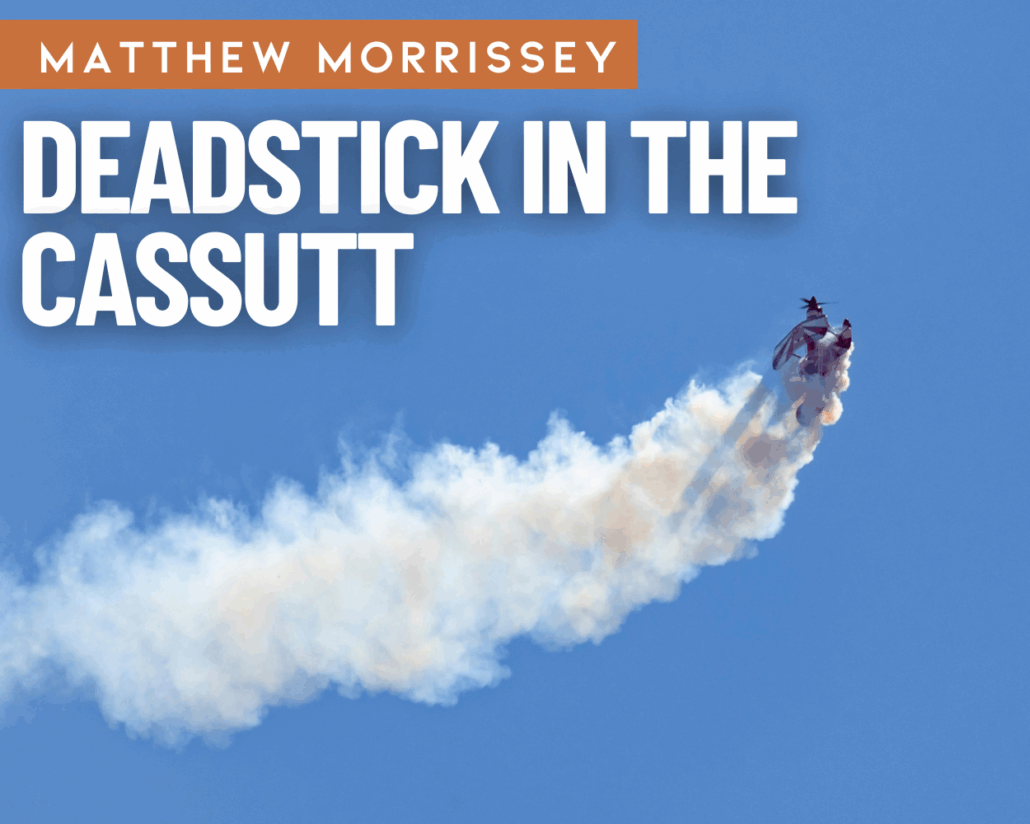
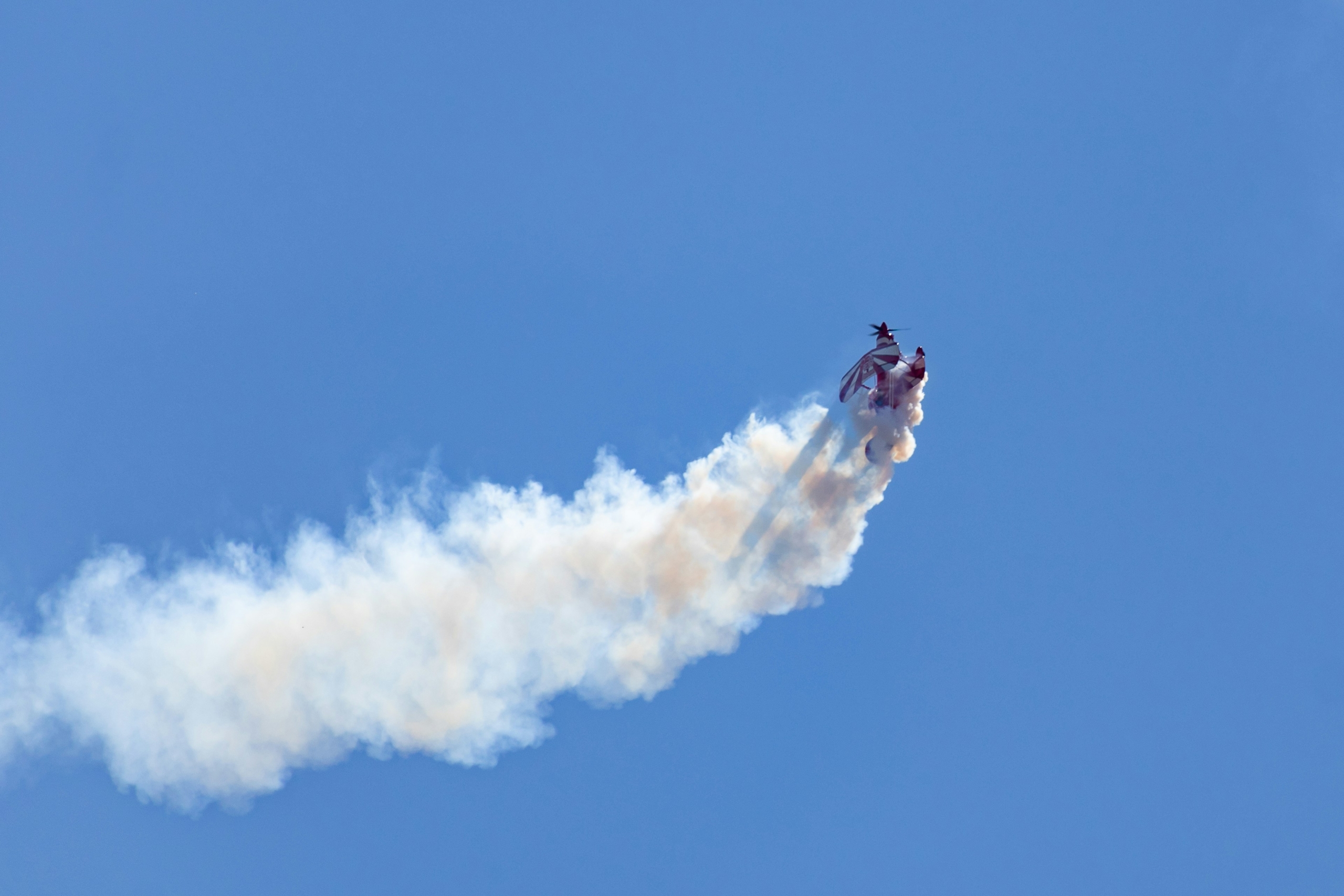
In the early 1990s, I was flying competition aerobatics and beginning my airshow career. I had competed at the regional and national levels in several different Pitts Special aerobatic aircraft. I had won the Sportsman National Championship title in a Pitts S-2A and was now flying in the Advanced category. I eventually won two International Advanced Championships in Fond du Lac, Wisconsin, in a single-seat Pitts S-2S. Like most competition pilots, my goal was always to win a World Championship.
Like most competition pilots, my goal was always to win a World Championship.
As much as I was consumed with aerobatic training, I always had a desire to compete at the Reno Air Races. At that time, the National Aerobatic Championship contest and Reno were both held in September. My competition mind was already planning on how to do both. First, I needed to get another airplane for racing.
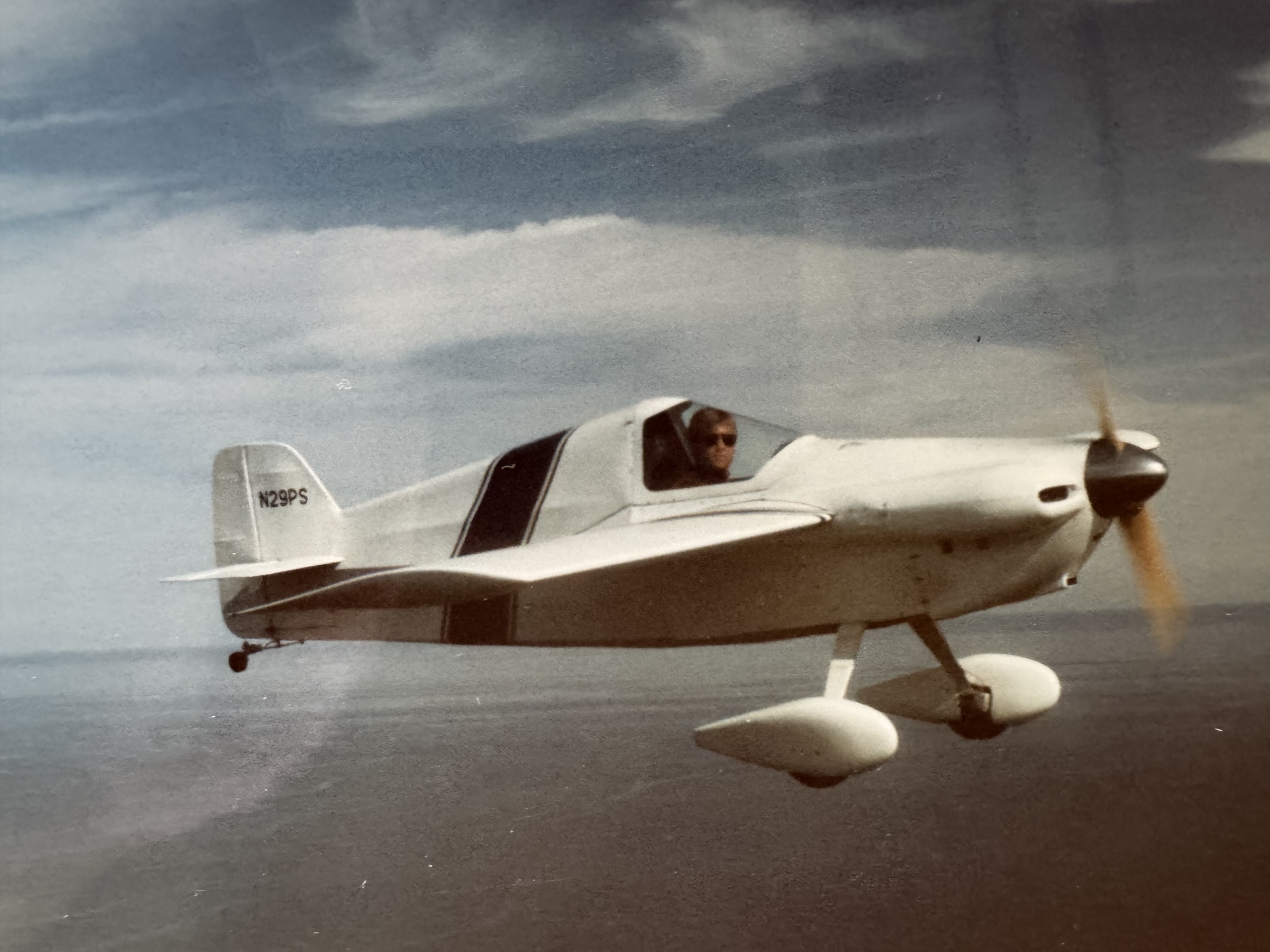
I was living on Amelia Island, Florida, then—a hub of aerobatic activity at the time. In the off-season I towed gliders with a WWI Fokker Triplane and gave aerobatic training in Pitts Specials at South Florida’s Pompano Air Center. During that time, I narrowed my search to a Cassutt race plane, a small Formula One design that had proven itself. It’s a mid-wing, tailwheel configuration, barely big enough to fit in, weighing only 500 pounds. The fuselage and tail are fabric-covered steel tube, while the wing is a one-piece wooden spar.
I tracked down a newly rebuilt Cassutt in Virginia. The 100 hp O-200 had been recently overhauled by a race car company and had very high compression. The fuselage had new fabric and fresh paint—white with blue accents. The aluminum fuel tank and cowling were replaced with lightweight composite parts. No fuel gauge, of course; it was designed for the race course, not long cross-countries. Normally, airplanes like this are trailered to events, not flown across states. I couldn’t afford a trailer, so I decided to fly it home.
I tracked down a newly rebuilt Cassutt in Virginia.
I flew commercial into Dulles, where the owner met me in his Beechcraft Bonanza. I had a cashier’s check in hand, no return ticket, and I bought it on the spot. I had never flown a Cassutt, but everyone I talked to said it handled wonderfully. All I brought with me was a toothbrush and sectional charts, with course lines and fuel stops marked. The Cassutt didn’t even have a compass, and I didn’t own a GPS. My plan was IFR: “I Follow Roads.”
The owner said it held 12 gallons. I figured the engine would burn about 7 gallons per hour in cruise, which gave me about an hour and twenty minutes of endurance. My first leg would follow I-95 south. It would be close. The engine sounded strong and smooth. After a while, I-95 curved away around some hills, and I decided—against my better judgment—to cut the corner across dense forest instead of sticking with the highway.
There was no sputtering, no cough, no warning. At 1 hour and 13 minutes, the engine just stopped. Dead quiet. With the high compression and light prop, there was no windmilling. And with no starter, the only way to relight it was by hand-propping from outside. Too low for an air restart, I was out of options.
I turned back for I-95. It was midday on a Sunday, and traffic was light. I set 100 knots, figuring that was close to best glide. It felt solid, and my glider time gave me confidence. I lined up for a dead-stick landing, but traffic got in the way—just a few cars, but right where I needed to be. With no power, I couldn’t go around. I shifted my aim to the grass median between the lanes. For the first time, I thought: this is going to end badly.
Then, just ahead, I spotted an overpass with a parallel frontage road running downhill, lined with trees. Instinct took over. I pulled over the trees, lined up with the road, and held centerline while the branches whipped by on either side. Too fast, and it was my first Cassutt landing. I kicked rudder to skid and scrub off speed. Just as I was about to set down, I noticed a single power line crossing the road. Normally I’d slip under it, but the only car on the road was about to pass underneath at the same time. Now too slow to climb over, I slid under the wire and over the car, then touched down safely.
The Cassutt rolled all the way down the hill. I turned into a driveway and coasted to a stop on a manicured lawn without ever touching the brakes. I opened the canopy as an older woman in a Sunday hat drove by, giving me a curious look. I waved.
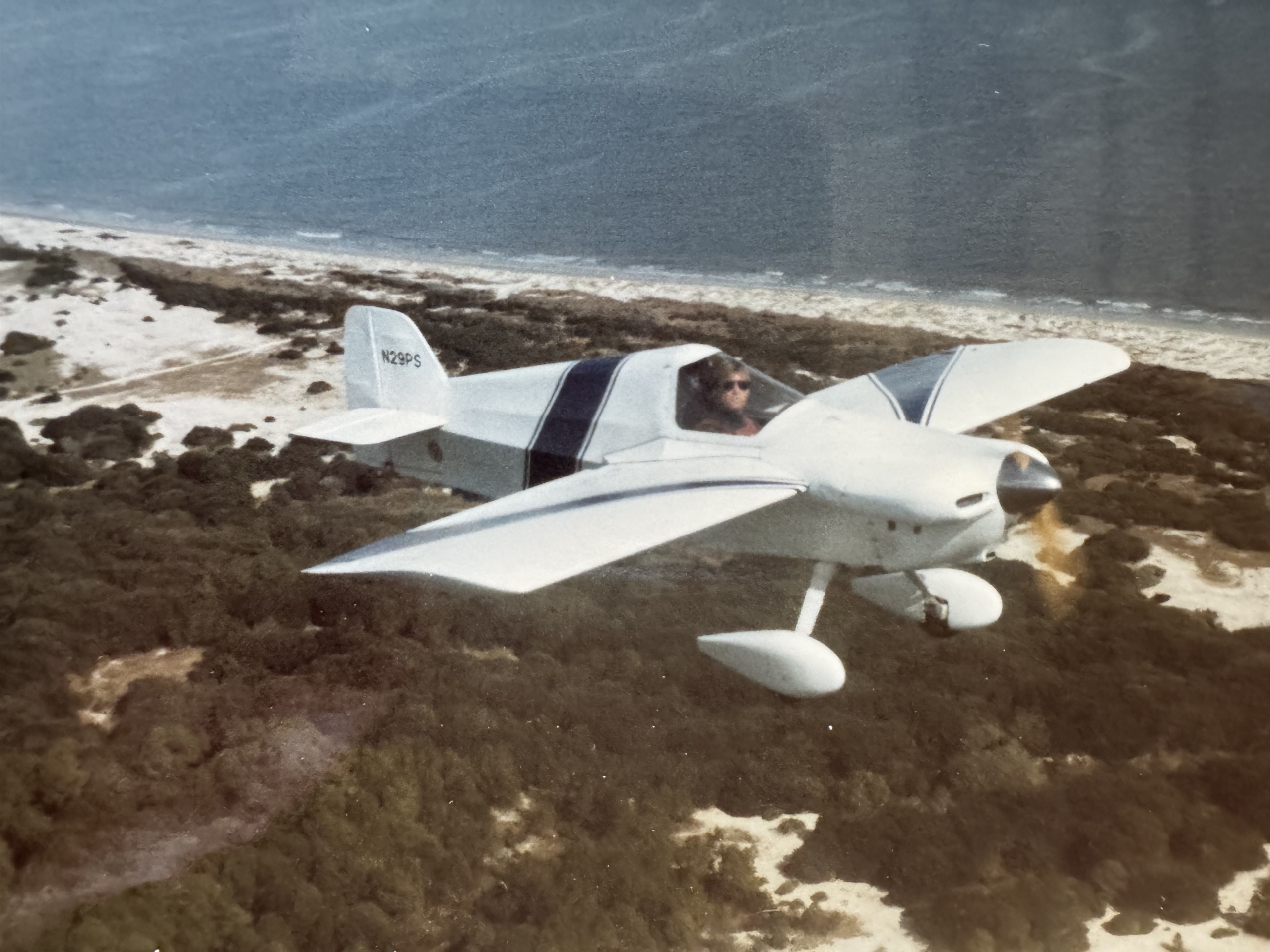
Photo taken just prior to engine failure at Amelia Island.
I walked up the long driveway, hoping for a ride into town for fuel. An elderly couple answered the door. When I asked for help, they said they didn’t drive anymore, glanced at the airplane in their yard, and shut the door. On my way back down the driveway, a pickup pulled in. The driver said he saw me glide over I-95 with a dead prop. His son was a pilot, and he was worried when I disappeared into the trees. I explained I had just bought the airplane and run it out of gas. He said the nearest police were 45 minutes away, but instead of calling, he offered me a ride.
We went to a gas station with a hardware store next door, where I bought two five-gallon cans and filled them. I called my roommate, a mechanic with the Red Barons, from a payphone to ask if the engine would run on auto fuel. He said yes, but told me to get 100LL in it as soon as possible. Then he asked, knowingly, “What did you do now?”
Back at the plane, a small crowd had gathered. Everyone seemed to know everyone else. I poured in the gas—only nine gallons—and got help spotting the road for takeoff. One man held the tail while I hand-propped the engine. With thumbs up from my new friends, I climbed in, took off, and made a pass overhead in thanks as they waved.
Later, while flying air-to-air photography of the Cassutt, the engine quit again. I glided back to Amelia Island without issue. Mechanics found nothing wrong. I flew it locally a few more times, and then on a formation flight with a friend in his Pitts S-2B, bound for Sanford, Florida. He led as we passed St. Augustine, when my engine quit again. No electrical system, no radio—I just fell back as he continued on. He landed at Sanford, and when my dad asked where I was, my friend said the last he saw me, I was on his wing. I dead-sticked into St. Augustine and decided I just wanted to get home.
After refueling, I flew back toward Amelia Island, circling overhead with my stopwatch running. At about 55 minutes, I loosened my harness and craned my neck above the cowling. At 1 hour and 13 minutes, it happened again. This time, I saw a puff of vapor from the right side cowl cheek just before the engine quit. Another dead-stick landing.
Back in the hangar, I pulled the cowl and found nothing obvious. Frustrated, I reached in and bumped the fuel vent line. The aluminum tube that should have pointed straight into the airstream was loose. In flight, it would pivot up, the glue holding its balsa wood block mount having failed. Without ram air pressure, the tank would vapor lock. At exactly 1 hour and 13 minutes, the engine would starve. On the ground, the vent pointed forward again, hiding the problem.
I never did race that Cassutt. I don’t think I ever flew it again. Eventually I sold it to a pilot who did race at Reno. He also owned a trailer.

- Deadstick in the Cassutt - September 15, 2025
- Storms, Strangers, and a Near Miss in Miles City - June 18, 2025
- Lost over Russia in an aerobatic airplane - April 15, 2019


So, did the tank actually have a 12 gallon capacity? If you could only get 9 gallons in it the first time, that should have raised a red flag.
It ended up with 13 gallons capacity but was vapor locking.
After FOUR engine failures in flight, I would have burned the plane to a crisp, taking sweet vengeance for the terrifying adventures. Sounds like the airplane version of Christine the car.