
I Can Hear You, But You Can’t Hear Me
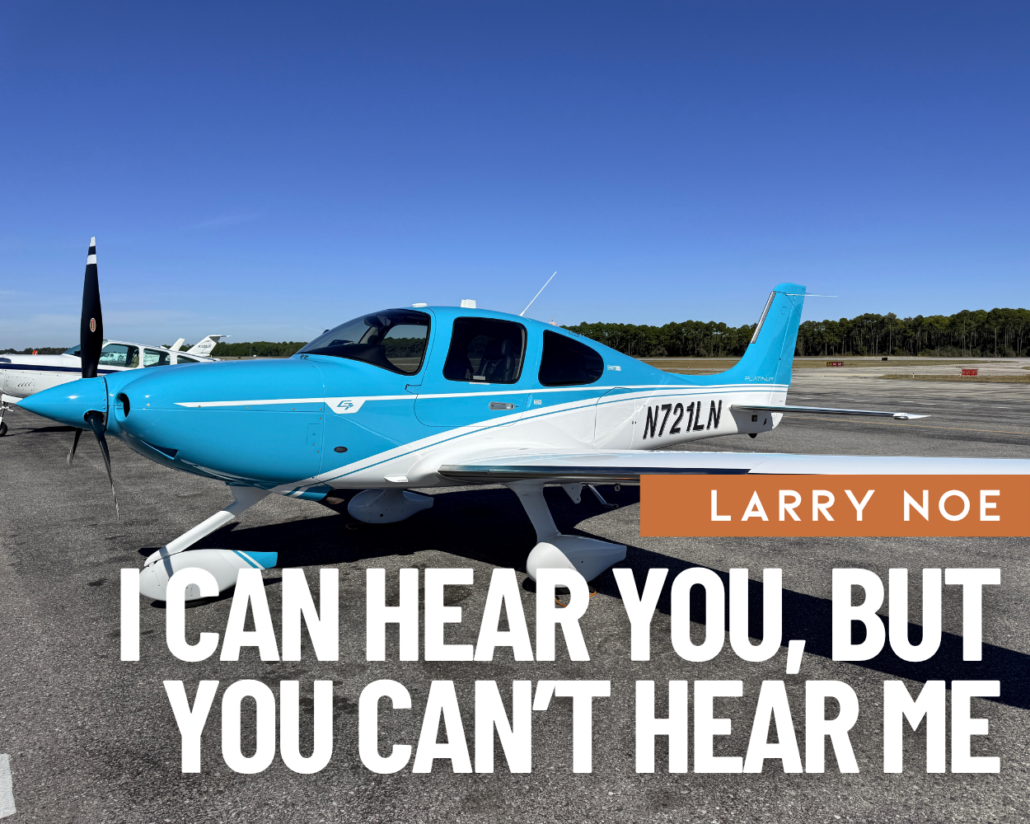
“I can’t hear you.”
I heard the Bonanza pilot say it just as I taxied into position at 1B1 (Columbia County Airport, Hudson, New York). I assumed he was talking to someone else. There was no reason to think otherwise: my radios had been working fine on the flight up from Caldwell, and everything in the cockpit looked normal.
Five minutes later, in the clouds, I realized he wasn’t.
I had taken delivery of my Cirrus SR22T in January and had been flying it as often as possible. With about 30 hours in the airplane, I scheduled a two-day IFR training trip with my instructor. We’ve done these trips for years—they’re always equal parts fun and humbling.
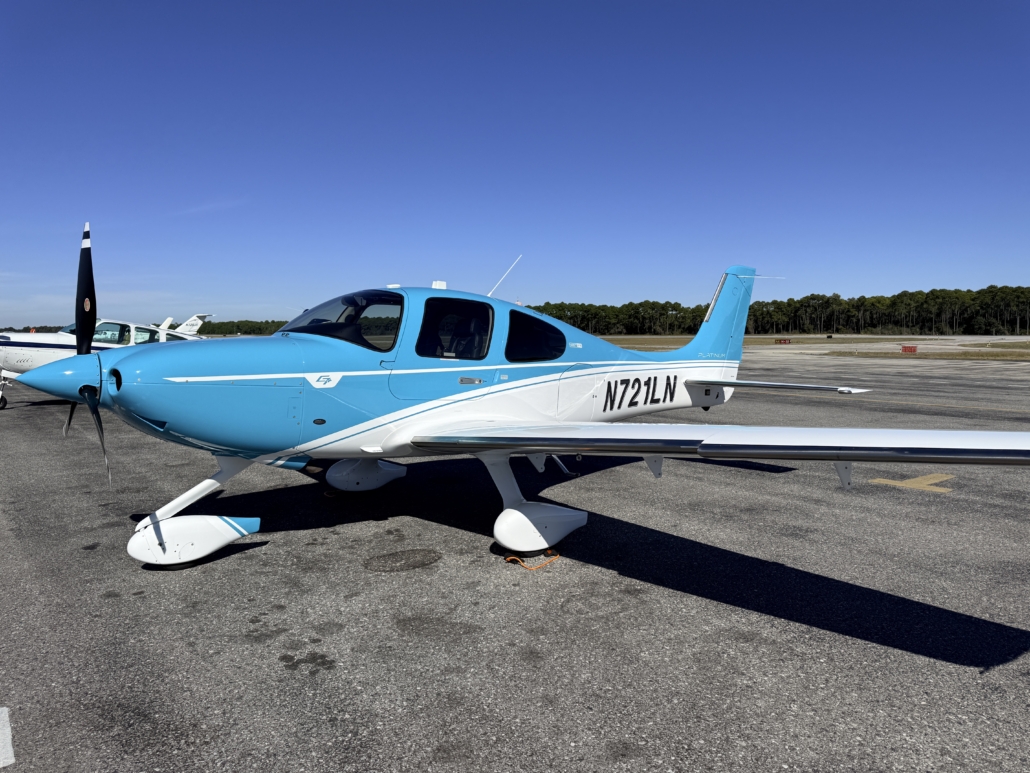
I had taken delivery of my Cirrus SR22T in January and had been flying it as often as possible.
The plan was straightforward: depart 1B1, pick up our clearance from Albany Approach by phone, fly to Martinsburg for an approach and missed approach, then continue to Martinsville for another approach and lunch.
At 1B1, there’s no clearance delivery or tower, so everything starts on the ground frequency—or, in this case, on the phone. We got our clearance, waited for a Bonanza to land, and taxied into position.
That’s when I made a standard call announcing we were taking the runway.
And that’s when the Bonanza pilot said, “I can’t hear you.”
I dismissed it.
We took off uneventfully and entered a shallow cloud layer around 4,000 feet. Once established, I checked in with Albany Approach.
No response.
I tried again.
Nothing.
I switched to COM2 and tried again.
Still nothing.
At that point, it was no longer a nuisance—it was a real problem.
We were climbing through IMC and unable to establish two-way communication. Shortly after, we broke out on top into VMC—but descending would have required going back into the cloud layer, and we still had no reliable way to transmit.
Then Albany came over the frequency. They could hear something—just not us clearly. All they were getting was static. At least we could hear them.
That changed the situation. This wasn’t a total communications failure—it was partial. We had one-way communication, and that gave us options.
The controller told us to climb to 10,000 feet and to respond by hitting IDENT. We did, and from that point on, we were communicating—just not in the usual way.
Now came the decision.
Do we turn back?
Do we declare an emergency?
Do we continue?
Turning back to 1B1 wasn’t as simple as it sounded. Although we were now in VMC on top, any descent would have put us back into IMC—and into an uncontrolled field environment with unknown traffic and no ability to transmit. Continuing, at least, kept us in a known IFR environment where ATC could see us and communicate with us, even if only one way.
We briefly considered squawking 7700, but this didn’t feel like a full emergency. The airplane was flying perfectly. Navigation was solid. We could hear ATC. This was a communications problem—but a contained one.
Then ATC offered an out. Wilkes-Barre/Scranton (KAVP) was about 20 miles ahead. If we wanted to divert there, we should squawk 7600.
That was an easy decision.
We squawked 7600 and proceeded to KAVP.
Approach cleared us for the ILS Runway 22 and advised us to watch for light gun signals from the tower. That got my attention—I had never actually seen light gun signals used outside of training.
Sure enough, on short final we saw the steady green.
Cleared to land.
We touched down uneventfully.
As we taxied in, the ramp was lined with fire trucks, airport vehicles, and personnel. The controller had declared an emergency on our behalf, and they were ready for us.
After shutdown, I cycled the electrical system. When we powered back up, the radios worked perfectly.
Like nothing had happened.
We spoke with Cirrus, and the working theory was an intermittent issue—possibly software-related. The airplane, after all, is as much computer as machine. Sometimes systems glitch. The difference, of course, is that rebooting your laptop is a minor inconvenience. Rebooting an airplane in flight is not.
We refueled, restarted, confirmed the radios were working, and continued the trip. The rest of the two days went exactly as planned.
But the lesson had already been delivered.
Looking back, the most important moment of the entire flight wasn’t in the clouds.
It was on the ground.
“I can’t hear you.”
That was the clue. The earliest, easiest opportunity to catch the problem—while still on the runway, still in VMC, still with options.
I ignored it.
There were other takeaways.
I thought about the checklist—specifically the step to check the COM and audio panel circuit breakers. They were in, not popped. In the moment, I chose not to reset them. We had partial communication, and I didn’t want to risk making things worse. In hindsight, would a reset have cleared the problem? Maybe. But it’s a different calculation in the air than it is on the ground.
I also thought about preflight habits. A quick radio check before departure—especially at an uncontrolled field and before launching into IMC—would likely have exposed the issue.
Simple. Quick. Easy.
Missed.
The airplane performed flawlessly. The avionics did exactly what they were supposed to do. ATC was outstanding.
The weak link came earlier.
The real lesson wasn’t about lost communications in flight. It was about missing the first indication—when the problem was still easy to solve.
Because sometimes, the most important call you hear is the one you almost ignore.
Listen to an audio clip of this event:
- I Can Hear You, But You Can’t Hear Me - July 20, 2026
- Do You Have an Abort Point? - February 16, 2026
- Spatial Disorientation: I Thought It Couldn’t Happen to Me - September 29, 2025


Was Doug S. your instructor? That’s his neck of the woods! :-)
Yes it was!